
Introduction: The Role of 3D Images in Automotive Branding
In today’s digital-first automotive market, visual content defines a brand’s identity. Traditional photography can capture reality, but 3D images offer endless creative possibilities. They allow automotive brands to McLaren F1 3D Images: How Cinematic Automotive CGI Is Transforming Modern Marketing
Disclaimer: McLaren is a registered trademark of its respective owner. This article and the featured 3D renders are created for editorial, educational, and portfolio purposes only. VNS Creative Agency is not affiliated with or endorsed by McLaren Automotive.
Introduction: Why 3D Images Are Changing Automotive Marketing
In today’s digital world, 3D Images have become one of the most powerful marketing tools for automotive brands. Whether launching a new supercar, creating social media campaigns, or building an interactive website, photorealistic CGI allows brands to present vehicles in ways that traditional photography cannot.
Luxury manufacturers like McLaren, Ferrari, Lamborghini, and Porsche rely heavily on premium visual content because customers often experience a vehicle online long before they see it in person. Every reflection, camera angle, shadow, and highlight contributes to how the brand is perceived.
At VNS Creative Agency, we specialize in creating photorealistic 3D Images, CGI product renders, animations, and commercial visuals that help brands stand out across digital platforms. For this project, we recreated the legendary McLaren F1 using Blender, focusing on cinematic lighting, realistic materials, and premium presentation.
If you’re interested in creating premium automotive visuals, explore our Product Photography, CGI Product Rendering, Automotive CGI, and 3D Product Animation services on our website.
What Makes the McLaren F1 One of the Greatest Supercars Ever Built?
Before discussing these 3D Images, it’s important to understand why the McLaren F1 is considered one of the most iconic cars ever produced.
Designed by legendary automotive engineer Gordon Murray and launched in the 1990s, the McLaren F1 redefined what a road-going supercar could achieve. It introduced innovations that were decades ahead of its time, including a lightweight carbon-fibre monocoque chassis, a naturally aspirated BMW V12 engine, and the famous center-seat driving position.
With a top speed exceeding 240 mph (386 km/h), it remained the world’s fastest production car for years and continues to be one of the most valuable collector cars ever built.
Its timeless design makes it a perfect subject for photorealistic 3D Images, allowing artists to showcase every aerodynamic curve, reflective surface, and engineering detail.
Learn more about McLaren Automotive on its official website:
https://cars.mclaren.com/
Why Are 3D Images Becoming Essential for Automotive Brands?
Modern automotive marketing depends on visuals that instantly capture attention.
Professional 3D Images allow brands to:
- Showcase vehicles before production begins.
- Create unlimited camera angles.
- Produce consistent visuals across every campaign.
- Reduce the cost of repeated photoshoots.
- Adapt marketing assets for websites, print, exhibitions, and social media.
Unlike traditional photography, CGI gives complete creative freedom. A single digital model can be rendered in multiple environments, seasons, lighting conditions, and color variations without moving the vehicle.
This flexibility is why many marketing agencies, creative agencies, and digital marketing agencies are incorporating CGI into their production workflows.
How Were These McLaren F1 3D Images Created?
Creating realistic 3D Images requires more than simply importing a model into software. Every element contributes to the final result.
For this project, Blender was used to build a cinematic presentation that emphasizes the elegance and performance of the McLaren F1.
The workflow included:
- Optimizing the vehicle model.
- Refining paint materials.
- Creating realistic carbon fibre textures.
- Adjusting glass and metal shaders.
- Building studio-quality lighting.
- Using HDRI environments for natural reflections.
- Fine-tuning camera composition.
- Post-processing for color grading and contrast.
The goal was not simply realism but storytelling. Every render was designed to feel like a frame from a luxury automotive commercial.
Why Does Cinematic Lighting Make 3D Images Look More Realistic?
Lighting is one of the most important aspects of photorealistic rendering.
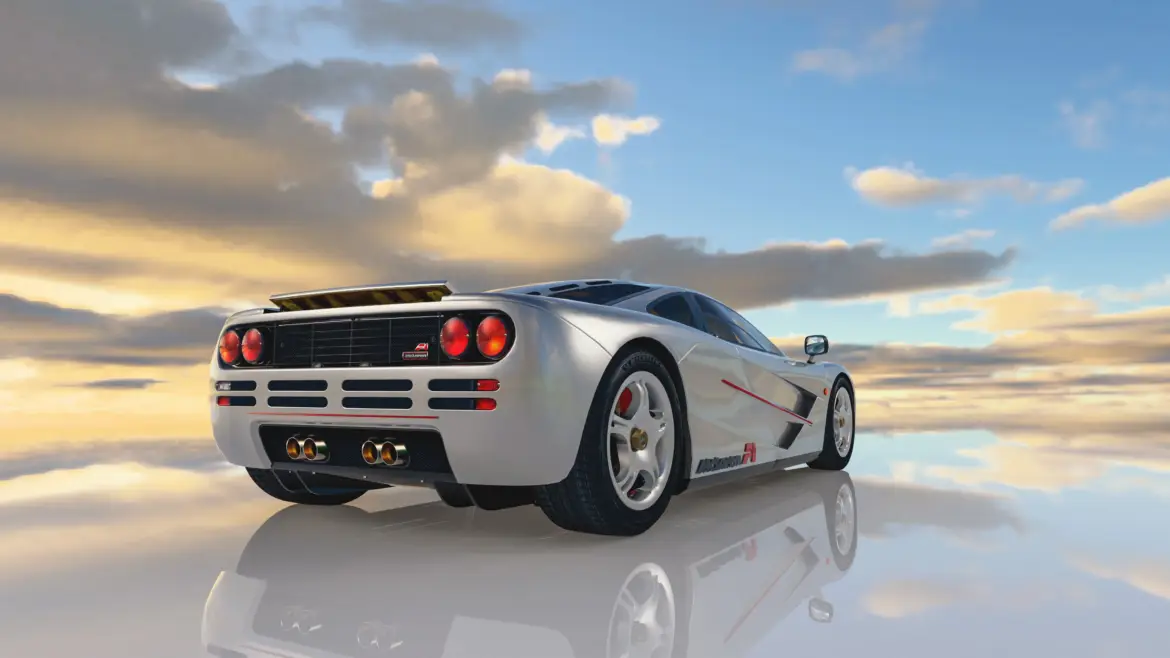
For these McLaren 3D Images, warm golden-hour lighting was selected because it enhances the vehicle’s curves while producing soft reflections across the bodywork.
This lighting technique creates:
- Better depth.
- More realistic reflections.
- Premium visual appeal.
- Cinematic atmosphere.
- Luxury branding.
Rather than overwhelming the viewer with harsh studio lighting, golden-hour illumination creates emotion and elegance that align perfectly with premium automotive marketing.
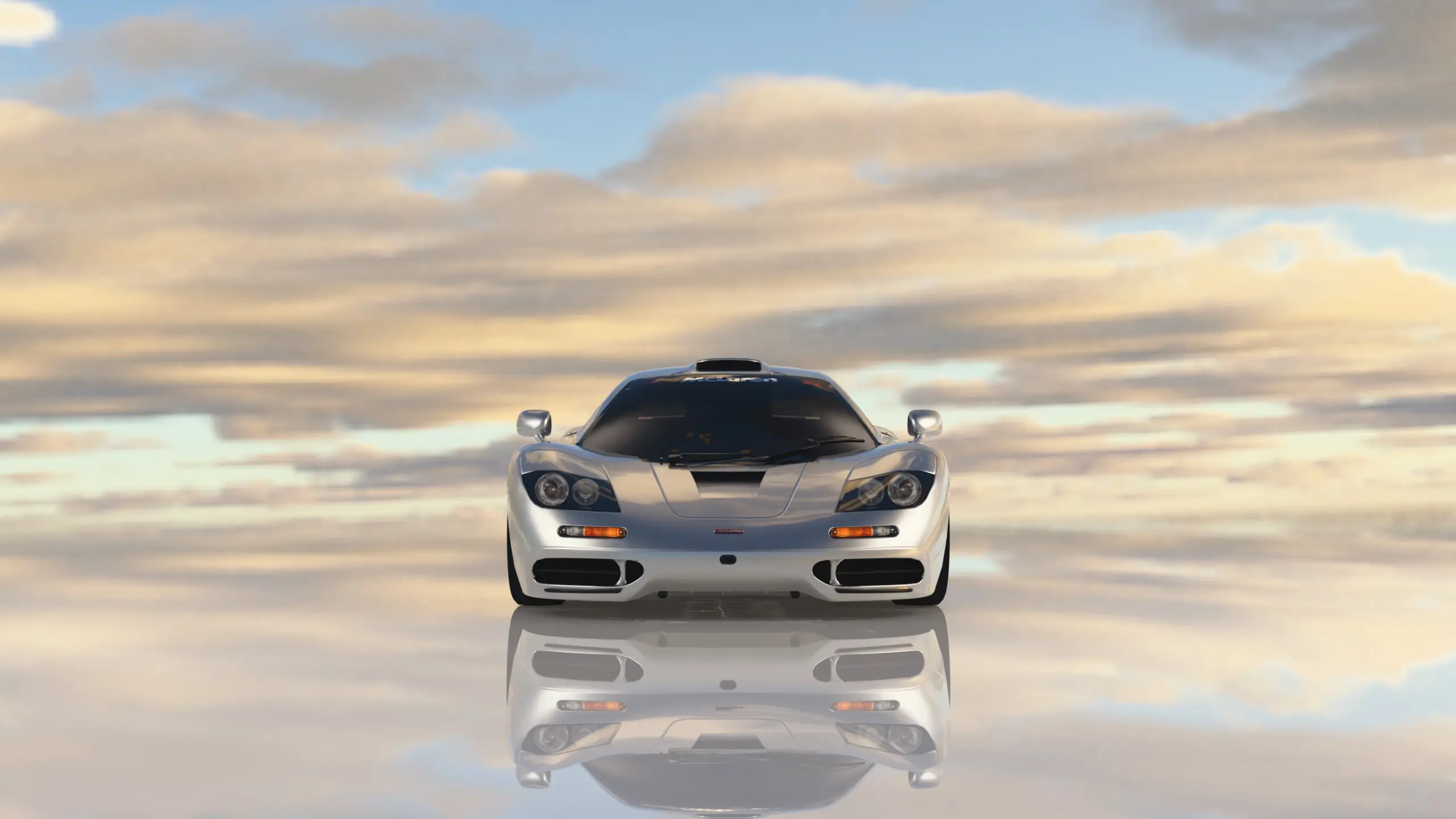
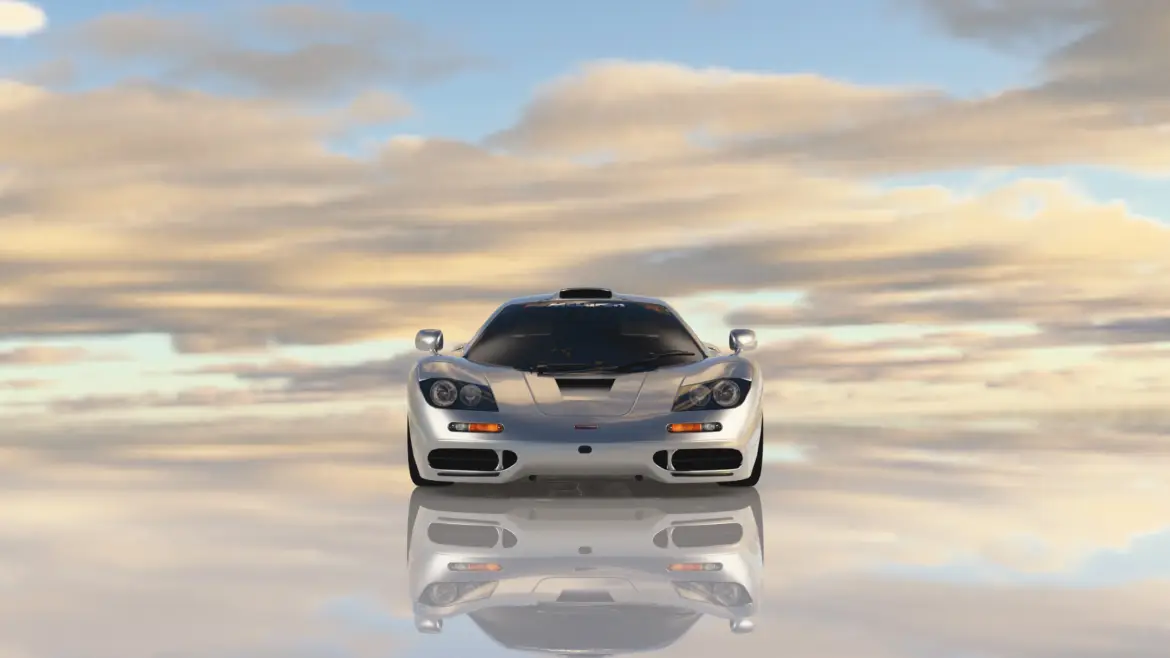
Alt Text: Photorealistic McLaren F1 3D image created in Blender with cinematic golden-hour lighting.
Front View: Highlighting Performance Through 3D Images
The front angle emphasizes the aggressive personality of the McLaren F1.
Low camera positioning creates a powerful stance while highlighting the aerodynamic front bumper, distinctive headlights, and flowing body lines.
Using CGI allows every detail to remain perfectly sharp, from subtle reflections across the paint to the intricate wheel design.
This type of visual is ideal for:
- Automotive websites
- Product launches
- Brochures
- Digital advertising
- Social media campaigns
Professional 3D Images like these help brands present vehicles with consistency across every platform.
Side Profile: Showcasing Timeless Automotive Design
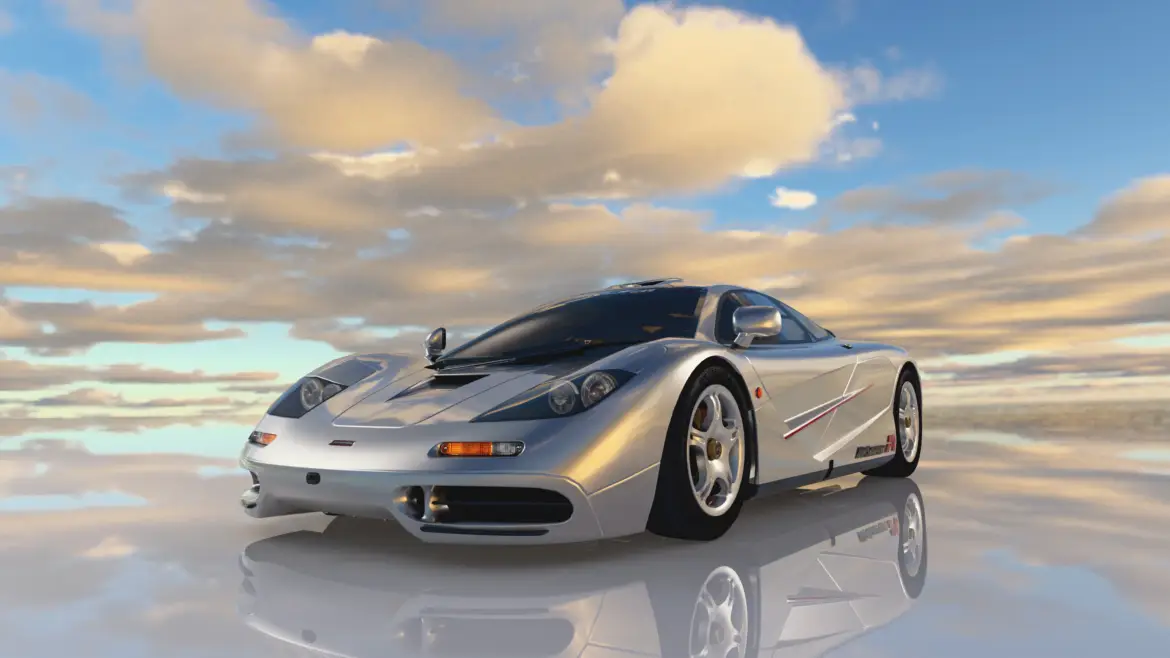
The side profile tells a different story.
Instead of emphasizing aggression, it focuses on proportion and elegance.
The McLaren F1’s iconic silhouette remains one of the most recognizable automotive designs ever created.
Using Blender allowed us to carefully position the camera so viewers could appreciate the long wheelbase, sculpted doors, and aerodynamic flow without distracting background elements.
These visuals demonstrate how 3D Images can showcase design language in ways traditional photography sometimes cannot.
Why Are Creative Agencies Investing in Automotive CGI?
Automotive advertising has changed dramatically over the past decade.
Today, a creative agency must produce content for websites, digital billboards, YouTube, Instagram, LinkedIn, Facebook, Pinterest, print campaigns, and interactive experiences.
Creating separate photoshoots for every campaign can be expensive.
Instead, CGI allows agencies to produce:
- Studio renders
- Lifestyle imagery
- Hero banners
- Product configurators
- Motion graphics
- Automotive animations
This flexibility makes 3D Images an essential asset for modern creative production.
How Can a Marketing Agency Use 3D Images to Increase Engagement?
Exceptional visuals attract attention before a customer reads a single word.
A professional marketing agency uses high-quality imagery to:
- Improve website engagement.
- Increase advertisement performance.
- Strengthen brand identity.
- Build customer trust.
- Create memorable campaigns.
Luxury products rely heavily on presentation. Whether marketing a supercar, watch, fragrance, or electronic device, premium 3D Images communicate quality immediately.
Why Does Social Media Marketing Depend on High-Quality Visuals?
Social media platforms reward engaging content.
Professional 3D Images allow brands to produce eye-catching visuals for:
A social media marketing agency can adapt CGI assets into reels, carousel posts, advertisements, and promotional campaigns without organizing repeated photoshoots.
This makes digital content production significantly faster while maintaining exceptional visual consistency.
For businesses investing in digital media and marketing agency digital strategies, photorealistic CGI provides a competitive advantage across every platform.
Why Is CGI Replacing Traditional Automotive Photography?
Photography remains essential, but CGI has become an increasingly valuable companion.
Brands choose 3D Images because they offer:
- Unlimited revisions.
- Faster campaign production.
- Consistent branding.
- Lower long-term costs.
- Creative flexibility.
- Impossible camera angles.
- Weather-independent production.
- Future-ready digital assets.
Many manufacturers now use CGI alongside photography for advertising, configurators, ecommerce, and vehicle launches.
Why Choose VNS Creative Agency for Automotive 3D Images?
At VNS Creative Agency, we combine technical precision with creative storytelling.
Our services include:
- Automotive CGI
- Product Photography
- 3D Product Rendering
- Commercial Animation
- Video Production
- Branding
- Social Media Content
- Luxury Product Visualization
Every project is designed to help brands create stronger emotional connections with their audiences while maintaining premium visual quality across every marketing channel.
Whether you’re launching a new vehicle, showcasing a concept model, or promoting an automotive accessory, our team creates visuals that support your marketing goals.
Frequently Asked Questions
What are 3D Images?
3D Images are computer-generated visuals created using specialized software such as Blender to produce photorealistic representations of products, vehicles, architecture, and other subjects.
Why are 3D Images important for automotive marketing?
They provide complete creative control, consistent quality, unlimited camera angles, and cost-effective production for advertising campaigns.
Was this McLaren F1 created in Blender?
Yes. These portfolio renders were created using Blender with realistic materials, cinematic lighting, and advanced rendering techniques.
Why do luxury brands use CGI?
Luxury brands use CGI to create premium marketing visuals before products are manufactured and to maintain consistent branding across campaigns.
Can 3D Images replace traditional photography?
Rather than replacing photography entirely, CGI complements it by providing greater flexibility and creative possibilities.
How long does it take to create automotive 3D Images?
The production timeline depends on the complexity of the model, scene, lighting, and revisions. High-quality automotive renders often require detailed planning and refinement.
Final Thoughts
The McLaren F1 remains one of the most celebrated supercars ever built, making it an ideal subject for premium 3D Images. Through Blender, cinematic lighting, and careful attention to detail, this project demonstrates how CGI can transform a legendary automobile into a compelling visual story.
As brands continue investing in digital media, marketing agency digital strategies, and high-impact online campaigns, photorealistic 3D Images will play an even greater role in shaping customer perception.
At VNS Creative Agency, we create premium automotive CGI, product renders, commercial animations, branding assets, and visual campaigns that help businesses stand out in today’s competitive marketplace.
Ready to bring your next automotive project to life? Visit our portfolio, explore our services, or contact our team to discuss your next CGI project.
Partner with VNS Creative Agency
At VNS Creative Agency, we transform vehicles into visual experiences that drive engagement and build brand value. Whether you’re launching a new model or refreshing your brand, our cinematic 3D images provide the storytelling power you need.
📩 Contact us today to elevate your automotive marketing with professional 3D imagery.
check our more images on portfolio
Contact Us to start your project
Explore More Work