
The AZIO Retro Classic Keyboard was the subject of a personal 3D product visualization project focused on one question: how realistic can a 3D product render actually look?
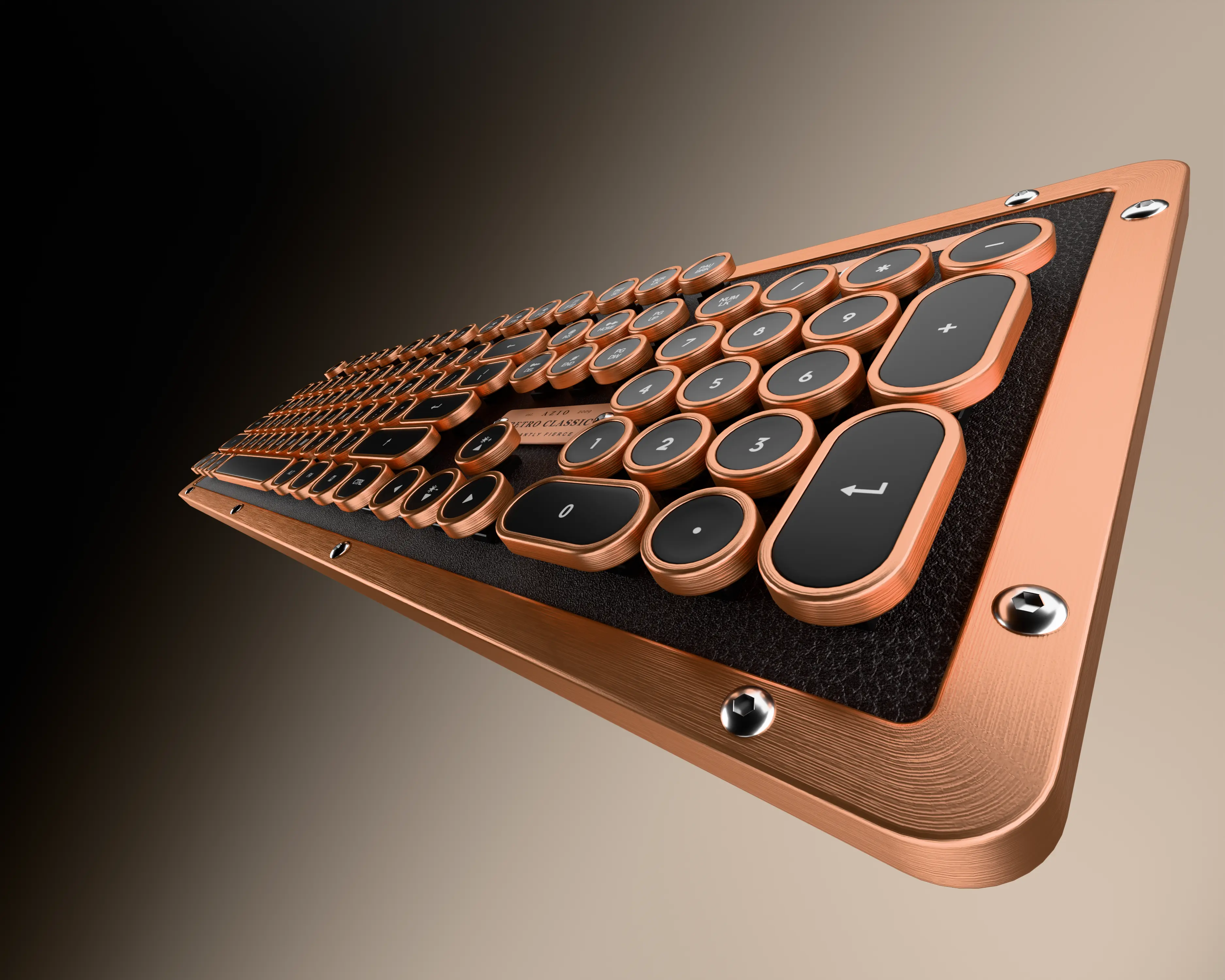
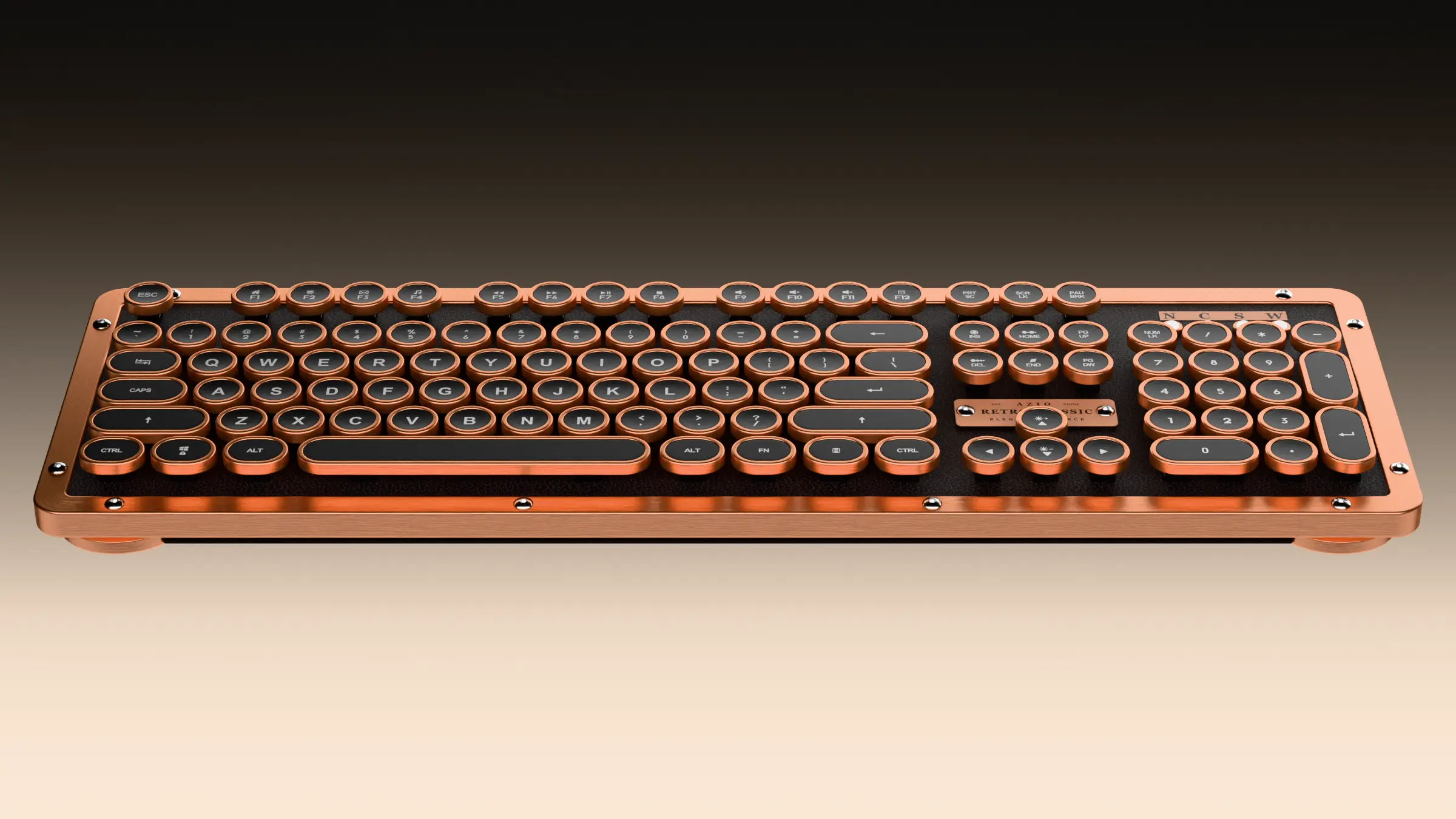
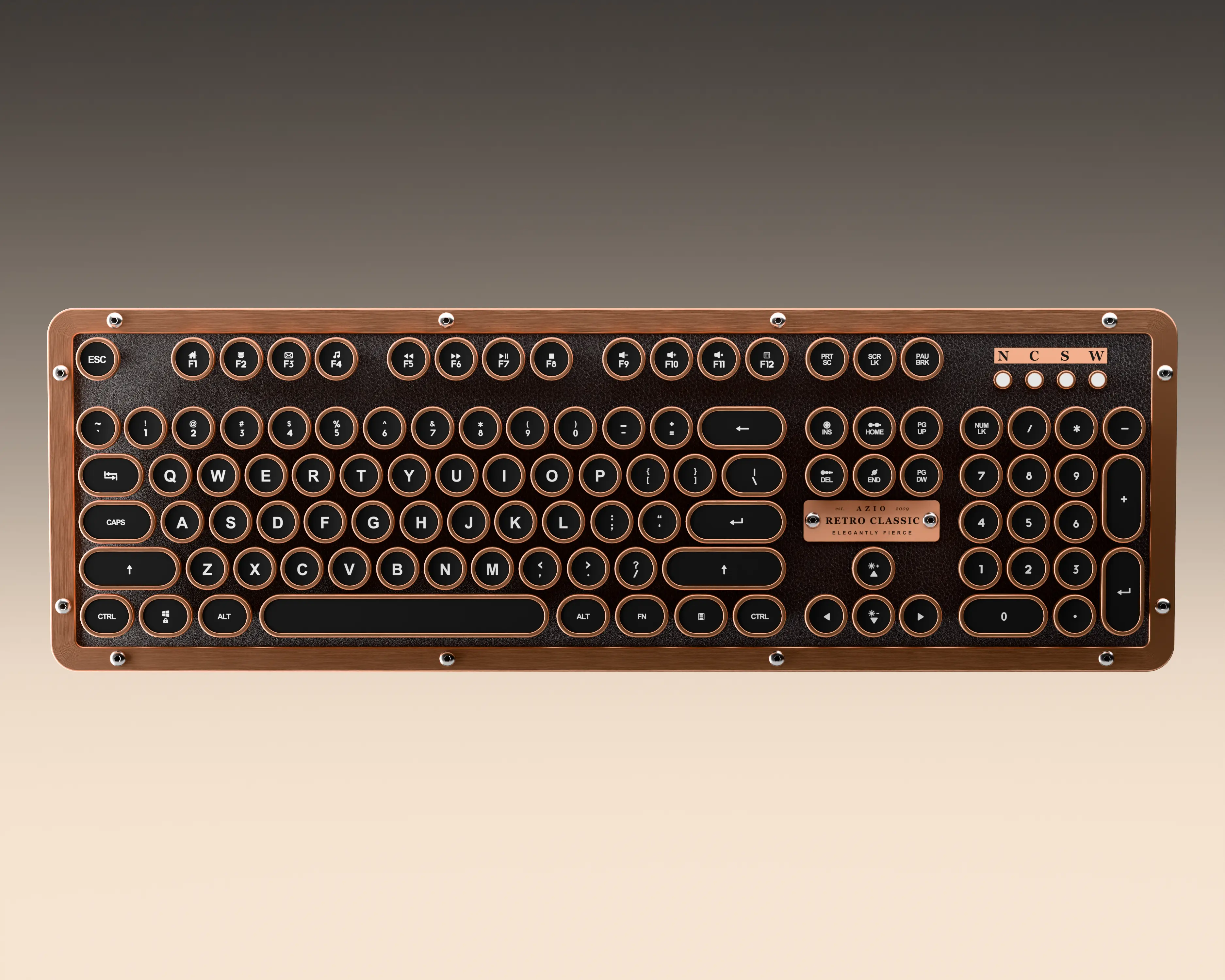
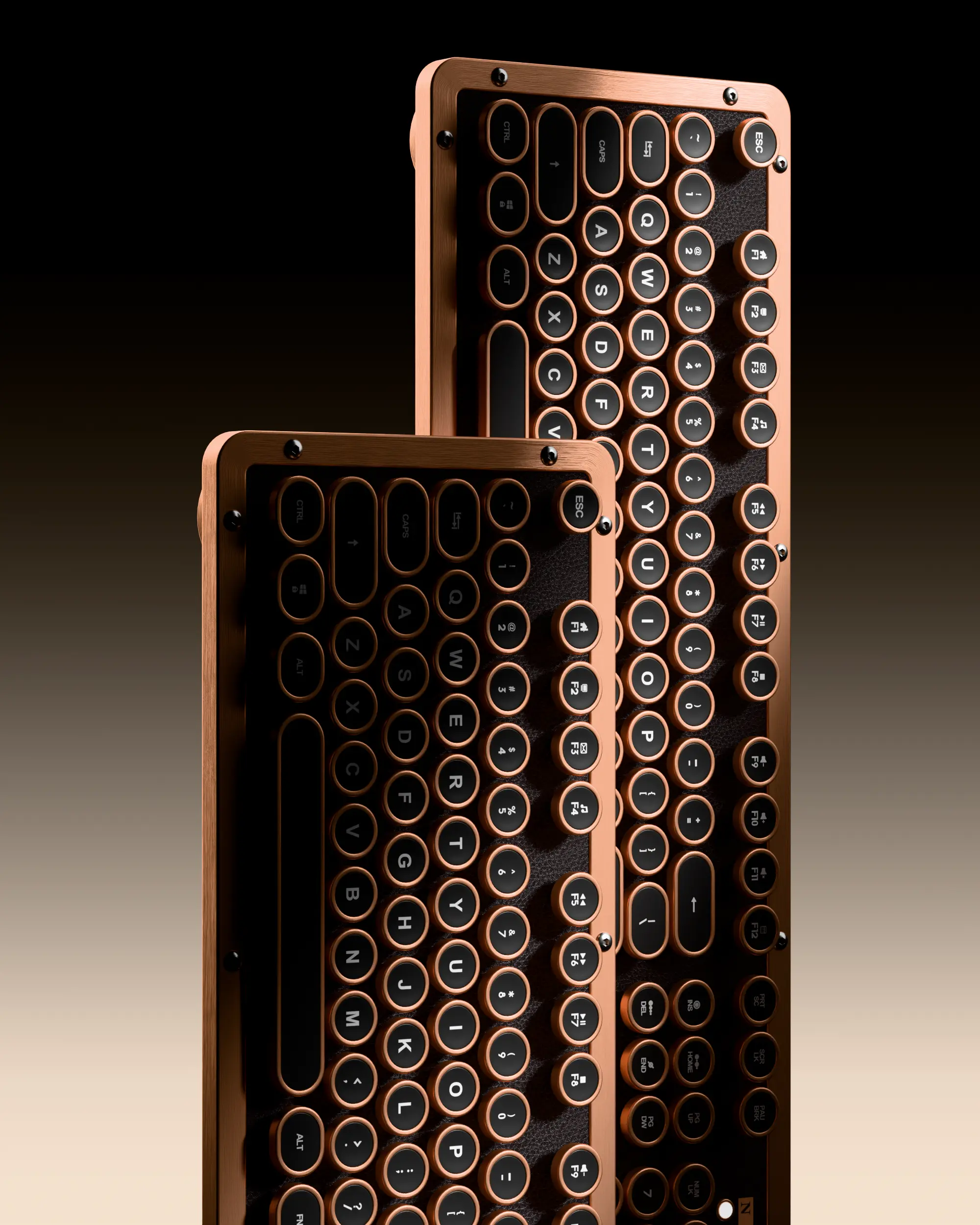
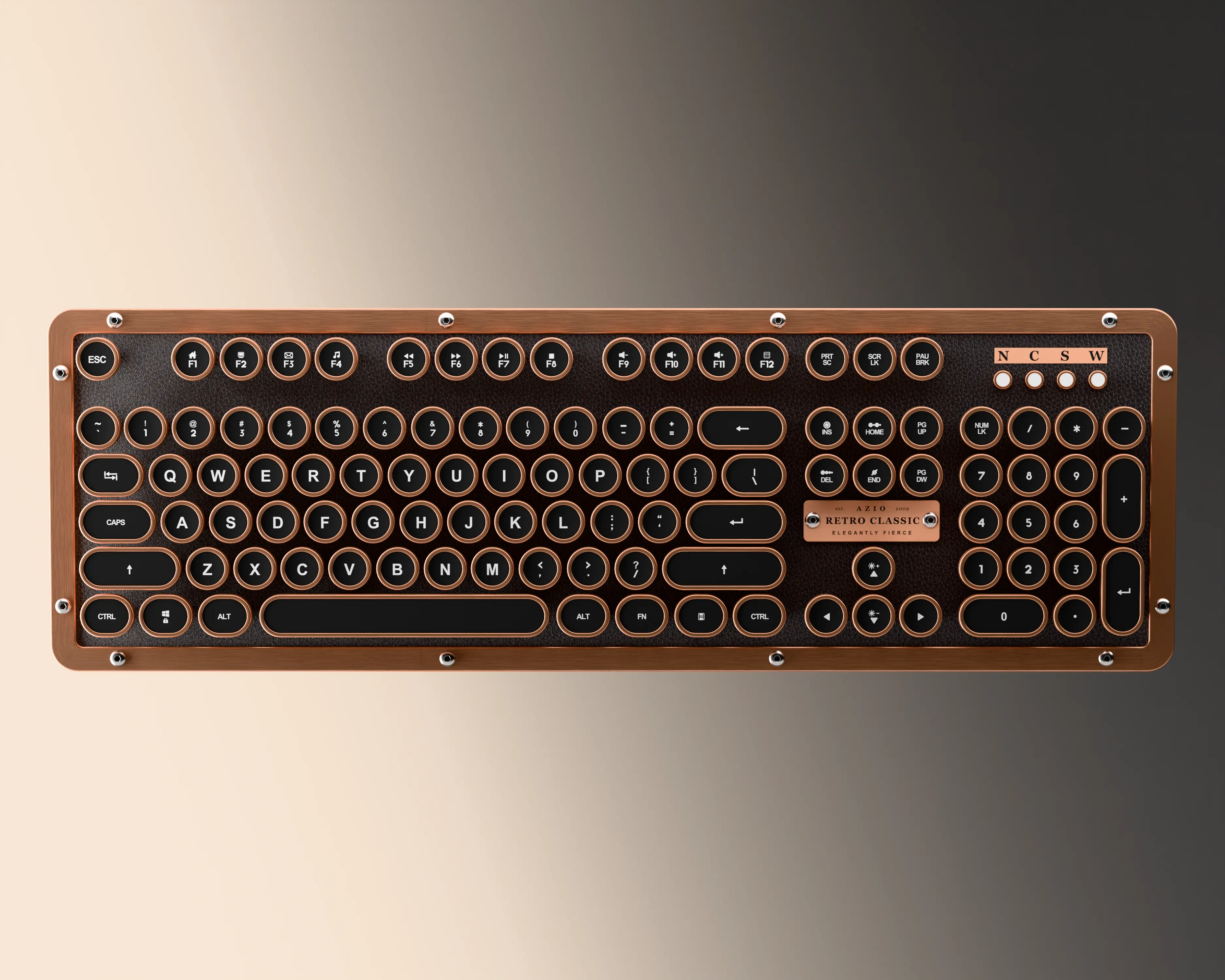
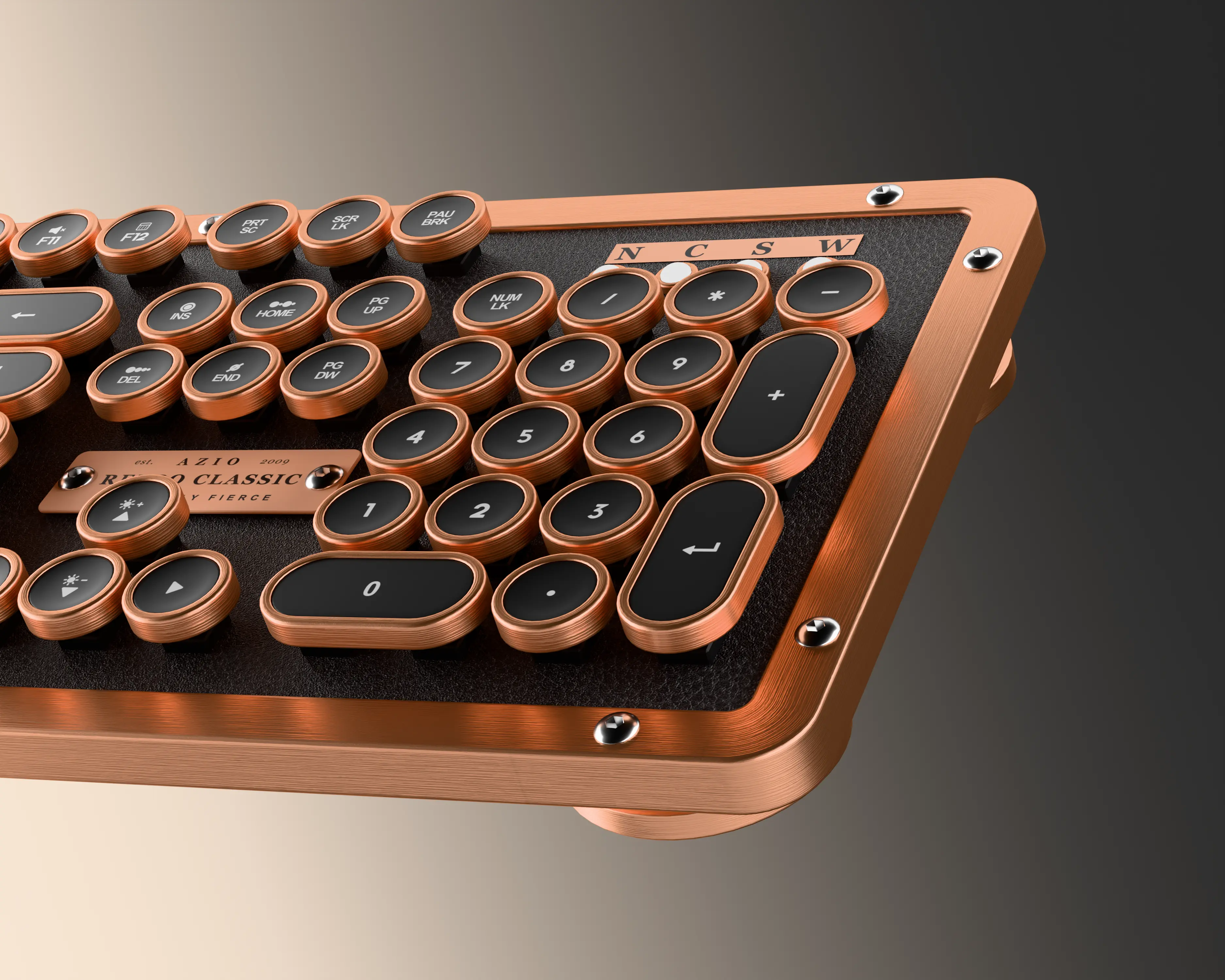
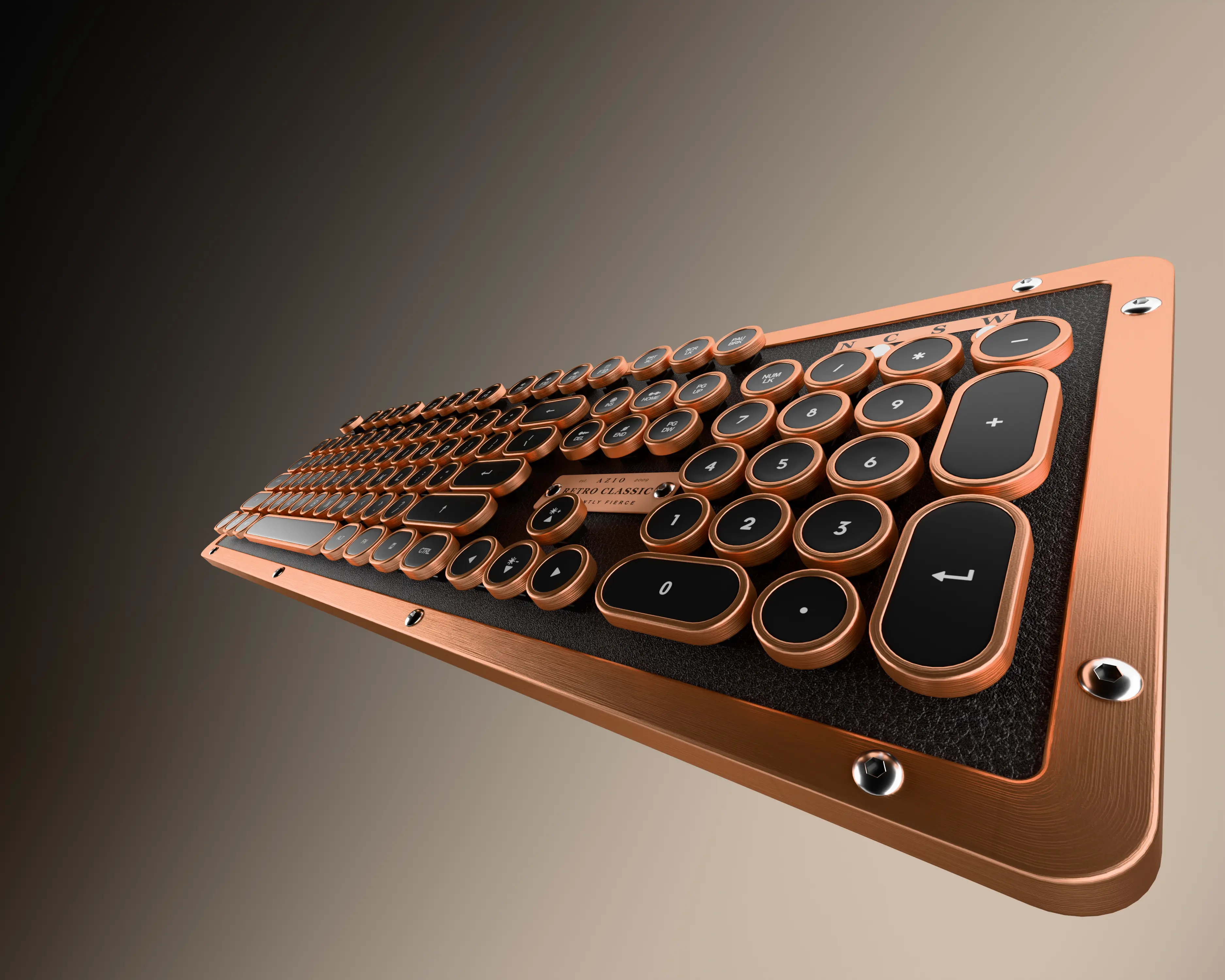
With more than 4 years of experience working across 3D product visualization, product photography, CGI, 3D modeling, and commercial visuals, I wanted to approach this project like a real product shoot — except everything would be created digitally.
From the wooden frame and individual keycaps to the metallic accents, materials, reflections, camera, and studio lighting, every visual element was created and controlled inside the 3D environment.
The goal was simple: make the 3D render feel like a real product photograph.
If you enjoy this kind of work, you can explore more projects and articles through the VNS Creative Agency blog.
Why Did I Choose the AZIO Retro Classic Keyboard?
The AZIO Retro Classic Keyboard is a particularly interesting product for a photorealistic 3D visualization because it combines several materials and design elements in one object.
The wooden frame introduces natural texture and variation. The metallic components require realistic reflections, while the individual keycaps need accurate geometry and subtle surface response.
That combination makes the keyboard an excellent subject for testing 3D product rendering.
Rather than simply creating a model that looked like the original product, I wanted to recreate the visual experience of seeing the keyboard inside a professional photography studio.
How Was the AZIO Keyboard Created in 3D?
The keyboard was recreated component by component, giving me control over the geometry, materials, textures, and lighting response of each part.
The wooden body was one of the most important elements. A perfectly uniform material can immediately make a CGI object look artificial, so the surface needed variation in texture, roughness, color, and reflections.
The individual keycaps were also modeled with attention to their proportions, spacing, edges, and bevels. These small details become particularly important when the product is rendered at high resolution.
The metallic elements were developed separately so that their reflections and highlights reacted differently from the wood and keycaps.
This level of control is one of the reasons I enjoy 3D product visualization — every part of the image can be designed around the product.
What Makes a 3D Product Render Look Photorealistic?
A detailed 3D model alone does not automatically create a realistic image.
Photorealism comes from the combination of geometry, materials, textures, lighting, camera perspective, reflections, shadows, and composition.
For the AZIO Retro Classic Keyboard, I approached the scene like a digital product photography setup.
The camera angle was carefully considered to create a natural product perspective. Studio lighting was then used to create controlled highlights, soft shadows, and reflections across the different surfaces.
The result is intended to sit somewhere between 3D rendering and digital product photography — where the viewer can focus on the product instead of immediately noticing that the image is CGI.
How Important Are Materials in 3D Product Visualization?
Materials can completely change the way a 3D product is perceived.
Wood should not reflect light in the same way as polished metal. A keycap should not have the same roughness as the keyboard frame. Even small differences in surface response can change how realistic an object feels.
For this project, I focused on creating distinct material behavior for the wooden frame, keycaps, metallic accents, and other surfaces.
Subtle differences in roughness, reflections, texture, bevels, and edge highlights helped build the final photorealistic appearance.
This is also why professional 3D studio images can be useful for brands that need highly controlled product visuals without relying entirely on a physical photography setup.
Can CGI Actually Look Like Product Photography?
That was the main purpose of this personal project.
Instead of making the image look like an impressive CGI render, I wanted to make it feel like an actual product photograph.
The lighting was designed to behave like studio lighting. The camera was treated like a real product photography camera. Materials were built around realistic physical responses, and the composition was created to present the keyboard as a commercial product.
The challenge was not making a 3D keyboard.
The challenge was making someone question whether the keyboard had actually been photographed.
What Details Were Recreated?
For this AZIO Retro Classic Keyboard visualization, I focused heavily on the details that influence the realism of the final image:
- Wooden frame geometry
- Wood texture and surface variation
- Individual keycap geometry
- Metallic accents
- Material roughness
- Realistic reflections
- Edge bevels and highlights
- Contact shadows
- Studio lighting
- Camera perspective
- Product composition
- Photorealistic rendering
Individually, many of these details are subtle. Together, they help create the physical presence that makes a 3D product visualization feel believable.
Why Create a Product in CGI Instead of Photographing It?
Traditional product photography remains extremely valuable, but CGI product visualization provides a different level of control.
With a digital product, the camera angle, lighting, environment, materials, reflections, and composition can all be changed without rebuilding a physical studio setup.
A single 3D asset can also become the foundation for multiple images, animations, advertising visuals, ecommerce content, and future campaigns.
This is one of the reasons I have explored both 3D product images and traditional ecommerce product visuals as part of my commercial workflow.
For brands interested in the difference between physical photography and CGI, our Product Photography Cost in India guide also explores the broader product imagery landscape.
3D Modeling, CGI and the Future of Product Visualization
3D product visualization continues to become a major part of modern commercial content. Brands can create product images and animations without needing to physically photograph every variation or build every environment.
The technology is also evolving quickly. I recently explored this topic in CGI in 2026: What Does the Future Hold for Brands? and in the article AI vs CGI in 2026.
For me, the AZIO keyboard project is a practical example of why CGI still offers something extremely valuable: complete control over the product and the image.
Why Was This AZIO Keyboard Project Important to Me?
This was a personal project, but it was also a technical exercise.
After working across 3D product visualization, product photography, CGI, and commercial content for more than 4 years, I wanted to create something where the quality of the final image depended entirely on my ability to control the digital photography process.
There was no physical studio setup behind these renders.
The product, materials, lighting, camera, environment, and final image were all created digitally.
That is what makes this project interesting to me — not simply that it is a 3D model of an AZIO keyboard, but that it attempts to reproduce the visual qualities of a professional product photograph.
From 3D Model to Commercial Visual
The same workflow can be taken much further for commercial projects.
A detailed product model can become the foundation for 3D product animation, product advertisements, studio images, lifestyle scenes, ecommerce content, and launch campaigns.
Our previous Moon Dust 3D product animation project is another example of how a digital product can be transformed into a complete commercial visual experience.
We also explore how brands can build reusable digital assets in our article about 3D modeling and animation.
About VNS Creative Agency
The AZIO Retro Classic Keyboard was created as a personal project by VNS Creative Agency.
VNS Creative Agency works across 3D product visualization, photorealistic 3D rendering, product photography, product animation, CGI advertising, commercial videos, VFX, and digital product content.
Our About VNS Creative Agency page provides more information about our approach and the type of visual content we create.
If you are looking for high-quality product visuals for your brand, you can contact VNS Creative Agency to discuss your project.
Explore More VNS Creative Agency Projects
Interested in more CGI and 3D work? Explore the VNS Creative Agency portfolio or browse the latest articles through the VNS Creative Agency blog.
For brands looking for photorealistic 3D product visualization, CGI product rendering, product photography, or commercial product animation, get in touch with us at manager@vnscreatives.com.
Project: AZIO Retro Classic Keyboard
Category: 3D Product Visualization / CGI / Photorealistic Rendering
Project Type: Personal 3D Project
Created By: VNS Creative Agency
Explore more: VNS Creative Agency Blogs | Portfolio | Contact Us
2 Comments
Tammy
Great post I have been reading all your posts and they are really
great keep up the good work.
Sol
Heya i’m for the first time here. I came across this board and I
find It really useful & it helped me out much. I hope
to present something again and aid others like you aided me.