The short answer is that there is no single fixed price.
A simple product render can be relatively affordable, while a highly detailed commercial asset involving complex modelling, realistic materials, simulations, custom environments and animation can cost significantly more.
The price is not determined simply by pressing a render button. You are paying for 3D modelling, texturing, lighting, look development, camera composition, rendering, compositing, revisions and creative direction.
At VNS Creative Agency, we approach product CGI as commercial visual production rather than simply producing a 3D image. The final objective is to make the product look believable, desirable and appropriate for the brand.
What Is the Average Cost of 3D Product Rendering in India in 2026?
For a straightforward product visual, a realistic market starting point can be around ₹3,000–₹8,000 per image.
More detailed commercial product renders can commonly move into the ₹8,000–₹20,000+ per image range, while highly complex hero visuals, luxury products, elaborate environments and advertising-quality CGI can cost considerably more.
These are broad working ranges rather than an official industry rate card. The actual quote depends heavily on the product, the quality required, whether modelling is included, the number of views, the complexity of the materials and how the final image will be used.
For example, a basic bottle on a clean studio background and a luxury watch inside a cinematic environment are both technically “one 3D product render” — but the production effort behind them can be completely different.
Why Can Two 3D Product Renders Have Completely Different Prices?
Because the final image is only the visible part of the production.
Consider two products.
The first is a simple plastic container with a straightforward shape and one material.
The second contains brushed metal, transparent glass, multiple mechanical components, tiny engravings, complex labels and reflective surfaces.
The second product requires substantially more work before the final render even begins.
That is why professional CGI studios generally quote based on the production requirements rather than simply charging for a JPG file.
Our VNS Creative Agency FAQs also explain that pricing depends on factors such as the type of content, complexity and number of outputs.
What Is Included in the Cost of a 3D Product Render?
A professional 3D product rendering project can involve several separate stages.
These may include:
- Product reference analysis
- 3D modelling
- UV preparation
- Material creation
- Texture development
- Lighting
- Camera composition
- Environment creation
- Rendering
- Compositing
- Color correction
- Final image preparation
Not every project needs every stage.
A simple studio render may require only modelling, materials, lighting and rendering. A commercial hero image may require an entire environment and extensive post-production.
This is one reason our 3D product visualization services are structured around the actual visual requirements of each project rather than one universal price.
Does 3D Modelling Increase the Price of Product Rendering?
Usually, yes.
If you already have a clean production-ready 3D model, the rendering stage can be much faster.
If you only have product photographs, sketches or physical samples, the artist may first need to build the product from scratch.
The complexity of that model can have a major impact on the final quote.
A simple cylindrical bottle can be modelled relatively quickly.
A consumer electronic device with buttons, seams, screws, internal components, curved surfaces and precise tolerances requires considerably more attention.
In some cases, the 3D modelling stage can represent a significant portion of the total project cost.
How Much Does Product Modelling Cost Separately?
There is no universal modelling price because the amount of work varies enormously between products.
As a broad budgeting concept, simple product modelling may start around ₹3,000–₹10,000, while highly detailed commercial models can move well beyond that.
The important distinction is whether the model only needs to look correct from one camera angle or whether it needs to be a complete production-quality asset.
A model created specifically for one front-facing image is different from a model that needs to support 360-degree renders, animation, close-up shots and future advertising campaigns.
That difference should be discussed before production begins.
Why Does Product Complexity Matter So Much in CGI Pricing?
Geometry is only one part of complexity.
Materials can be equally challenging.
Glass, chrome, brushed aluminium, polished plastic, translucent materials, leather, fabric and coated surfaces all react differently to light.
A product with ten simple surfaces may therefore be easier to render realistically than a product with three highly reflective materials.
This is especially true for luxury products.
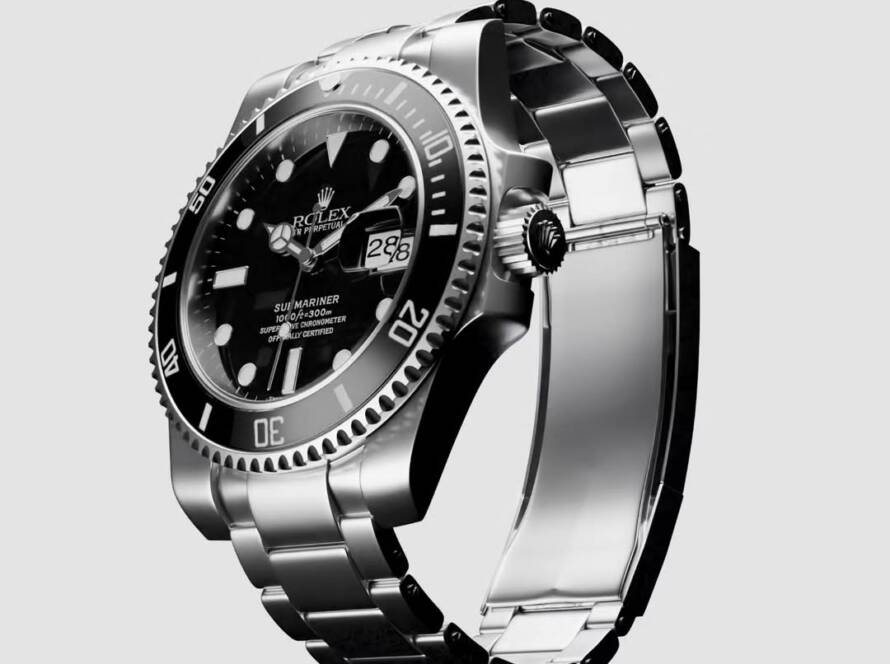
Our Rolex-inspired 3D product visualization project demonstrates why luxury-product CGI requires attention to precision, reflections, materials and premium presentation.
How Do Materials Affect the Cost of a 3D Product Render?
A realistic material is not simply a color.
It can contain multiple properties such as roughness, reflection, transmission, subsurface scattering, micro-surface detail and texture variation.
For example, a simple matte plastic surface may require relatively little look development.
A polished metal surface needs accurate reflections and controlled lighting.
Glass requires accurate transmission and refraction.
Leather may require surface imperfections and fine texture.
These details can make the difference between a render that looks like a real photograph and one that immediately looks computer-generated.
If you want to understand why this level of control matters, our CGI in 2026 guide discusses how modern CGI gives brands control over lighting, product consistency and reusable digital assets.
Does the Number of Images Change the Price?
Yes, but not always in a simple one-image-equals-one-price calculation.
If the same model, materials and lighting setup are already completed, creating additional camera angles can be considerably more efficient than producing an entirely new scene.
For example, producing one hero render might cost more per image than producing a package of five or ten coordinated views.
This is why bulk product visualization can often be more efficient than ordering individual images one at a time.
If you are building an ecommerce catalogue, it can make sense to plan the entire visual system before production begins.
Is It Cheaper to Order 10 CGI Images Together?
It can be.
When multiple images use the same product model, material setup and visual direction, the initial production work can be distributed across multiple outputs.
Instead of rebuilding everything for every image, the artist can work from an established scene.
This is particularly useful for ecommerce brands that need:
- Multiple product angles
- Different colors
- Different product variants
- Feature images
- Dimensions visuals
- Lifestyle renders
- Marketplace images
VNS Creative Agency also works with bulk content and monthly production, which can make sense for brands that continuously launch or update products.
How Much Does a 3D Lifestyle Product Render Cost?
A lifestyle render usually costs more than a basic studio render because you are no longer creating only the product.
You are creating the world around the product.
That may involve modelling or sourcing environment elements, designing the composition, creating realistic lighting, developing surfaces, placing props and rendering the entire scene.
A basic studio product image might therefore cost a few thousand rupees, while a sophisticated lifestyle scene can move into the ₹10,000–₹30,000+ range, depending on complexity.
Our 3D lifestyle image service is designed specifically for brands that want to place their products inside controlled, realistic environments.
Why Are Hero Images More Expensive Than Standard Product Renders?
A standard ecommerce render is generally designed to communicate the product clearly.
A hero image has a different purpose.
It is designed to stop attention.
It may contain cinematic lighting, dramatic composition, atmospheric effects, custom environments, reflections, particles, simulations or complex camera work.
The product might occupy only part of the frame while the environment creates the emotional impact.
That additional creative and technical work is why a hero render can cost significantly more than a basic white-background product image.
You can see this difference in our Moon Dust 3D product commercial, where the product was integrated into a custom space-themed environment rather than simply placed against a blank background.
How Much Does a CGI Product Animation Cost in India?
Animation is generally more expensive than a single still image because the artist has to create and render a sequence of frames rather than one final frame.
A short, simple product animation might begin around ₹25,000–₹50,000, while polished commercial animations can quickly move into the ₹50,000–₹1,50,000+ range.
Large advertising productions can cost substantially more depending on the number of shots, simulations, environments, visual effects and duration.
Our product explainer and commercial video services cover these kinds of projects, from technical product demonstrations to cinematic product advertising.
Why Does Animation Cost More Than a Single Product Image?
Because animation introduces time.
Instead of making one frame look correct, every frame needs to work.
The artist may need to animate:
- Camera movement
- Product rotation
- Mechanical components
- Materials
- Lighting
- Particles
- Fluid simulations
- Environment elements
Rendering also becomes significantly more demanding.
A single image may require minutes or hours to render depending on the scene. An animation can contain hundreds or thousands of frames.
That is why animation should be budgeted as a production rather than simply “many images.”
Does the Rendering Engine Change the Price?
Sometimes indirectly.
Different rendering engines and production pipelines can be better suited to different visual requirements.
At VNS Creative Agency, tools such as Blender and professional rendering workflows allow us to select the appropriate approach based on the project.
The client isn’t simply paying for which software is used.
They are paying for the final visual result, technical execution and creative direction.
The most expensive software does not automatically produce the most realistic render.
The artist’s modelling, materials, lighting, composition and understanding of photography remain critical.
Why Does Photorealism Increase the Cost of CGI?
Photorealism is not simply about increasing the render quality.
A realistic render contains imperfections.
Real products have tiny scratches, subtle roughness variations, edge highlights, manufacturing details and material inconsistencies.
Perfectly clean CGI can actually look less realistic because real-world objects are rarely mathematically perfect.
Creating those details takes time.
That is why there is a significant difference between a basic 3D render and a photorealistic commercial product visualization.
How Do Product References Affect a 3D Rendering Quote?
The quality of your references can directly affect production efficiency.
If you provide detailed product photographs from multiple angles, dimensions, packaging artwork, material references and technical drawings, the artist has more information to work with.
If you provide one blurry photograph and say “make this,” the artist may need to spend considerably more time interpreting the product.
For complex products, technical drawings or CAD files can be extremely useful.
A good production brief can therefore reduce uncertainty and help the studio provide a more accurate quote.
Do CAD Files Make 3D Rendering Cheaper?
They can.
If you already have a clean CAD model that can be converted into a usable rendering asset, some of the modelling work may be reduced.
However, CAD geometry is not always ready for rendering.
It may need cleanup, optimization, UV mapping, bevels, material assignment and other preparation before it produces a convincing image.
So having a CAD file does not automatically mean the rendering is finished.
It simply gives the artist a potentially valuable starting point.
How Much Do Product Variations Add to the Cost?
Product variations can be relatively efficient when the underlying 3D model is already built.
For example, changing a product from black to white may only require a material adjustment.
Changing the geometry, packaging, accessories or physical dimensions can require significantly more work.
This is one of the major advantages of CGI for brands with multiple SKUs.
Once the core digital product is established, new variations can often be produced without repeating an entire physical photoshoot.
Can 3D Rendering Actually Save Money Compared With Photography?
Yes — particularly over the long term.
Traditional photography can involve product samples, studio rental, photographers, assistants, props, locations, logistics, shipping and reshoots.
CGI has a higher digital-production component but can provide a reusable asset that continues producing new images.
Our CGI in 2026 article discusses several of these advantages, including reducing expensive reshoots, maintaining consistent branding and creating multiple variations without rebuilding physical sets.
The economics therefore become more interesting when a brand needs many images, multiple variations or repeated campaigns.
When Is Traditional Photography Still the Better Option?
CGI is not automatically better for every product.
Photography can be preferable when the physical interaction with the product is important, when authentic real-world environments matter, or when the product has natural irregularities that are difficult to reproduce digitally.
Many sophisticated campaigns actually combine the two.
Photography can provide authenticity while CGI can create visuals that would be difficult or expensive to capture physically.
Our luxury product visualization work demonstrates how CGI can be used alongside the visual language of premium product photography.
How Does the Number of Revisions Affect 3D Rendering Cost?
Revisions are one of the most overlooked parts of a CGI budget.
Changing a camera angle before rendering may be relatively straightforward.
Changing the product model after the entire scene has been built can be much more expensive.
Changing the creative direction halfway through a project can require rebuilding the composition, lighting and environment.
This is why a clear brief and approval process can make a major difference.
At VNS Creative Agency, our project FAQ explains that timelines and pricing depend on the type and complexity of the project, while revisions and deliverables are defined as part of the production process.
Should You Choose a Cheap 3D Rendering Service?
Not necessarily.
Price should always be considered alongside quality, communication, accuracy and intended usage.
A cheap render may be perfectly suitable for an internal concept.
It may not be suitable for a national advertising campaign.
The important question is not:
“Who is the cheapest 3D artist?”
The better question is:
“What level of visual quality does my product and marketing campaign require?”
What Makes a ₹5,000 Render Different From a ₹25,000 Render?
The difference may involve almost every production stage.
A lower-budget render might use a simple model, basic materials, one lighting setup and a straightforward camera.
A higher-end render may involve detailed modelling, custom materials, realistic imperfections, sophisticated lighting, environment design, multiple iterations, advanced compositing and art direction.
Both can technically be called “3D product renders.”
But they are designed for completely different purposes.
This is why looking only at the price per image can be misleading.
How Should Brands Calculate Their 3D Rendering Budget?
Instead of starting with a random number, break the project into outputs.
For example:
- How many products need modelling?
- How many images are required per product?
- Are there multiple variants?
- Are lifestyle environments required?
- Are infographics required?
- Is animation required?
- Will the model be reused later?
- How many revision rounds are expected?
- Where will the final content be used?
Once those questions are answered, it becomes much easier to create a realistic production budget.
What Is a Reasonable 3D Product Rendering Budget for a New Brand?
For a small brand testing CGI for the first time, starting with a focused package can make sense.
For example, instead of commissioning twenty unrelated images, you could create one high-quality master model and produce a small set of studio, lifestyle and feature visuals from it.
That allows you to evaluate the visual style before expanding the asset library.
For established brands, it may make more sense to build a larger reusable 3D library covering multiple products and variants.
This is where VNS Creative Agency’s product visualization services can be structured around both individual projects and larger content requirements.
Can One 3D Model Become a Long-Term Marketing Asset?
Absolutely.
This is arguably one of the strongest reasons to invest in high-quality product CGI.
A properly constructed model can potentially be reused for:
- Ecommerce images
- Website visuals
- Product launches
- Social media
- Digital advertising
- Product animations
- Exploded views
- 360-degree visuals
- Commercial videos
Instead of buying a single image, you are creating a digital product asset.
Our Moon Dust project is a good example of how a product can become the foundation for an entire cinematic visual experience rather than remaining a single static render.
Why Is CGI Becoming More Valuable for Product Marketing in 2026?
Brands are expected to produce more visual content than ever.
One product may need marketplace images, website banners, Instagram content, advertising creatives, launch videos and campaign visuals.
Creating every one of those assets from scratch through photography can become expensive and difficult to keep consistent.
CGI offers a different production model.
Once the digital product exists, the brand can continue creating new visual content around it.
That is one reason our recent CGI in 2026 article focuses on the growing role of CGI in modern commercial production.
What Should You Ask a 3D Rendering Agency Before Hiring Them?
Don’t ask only for the price.
Ask:
- Is 3D modelling included?
- How detailed will the model be?
- Are materials and textures included?
- How many camera angles are included?
- How many revision rounds are included?
- Is compositing included?
- Are lifestyle environments included?
- Can the model be reused for future renders?
- What file format will the final images be delivered in?
- What is the expected production timeline?
You can also review the agency’s previous work. A portfolio is often more useful than a generic promise of “photorealistic CGI.”
You can explore VNS Creative Agency’s portfolio to see examples of our product visualization, CGI and commercial work.
How Long Does a 3D Product Rendering Project Take in India?
A simple image can sometimes be completed within a few working days.
More complex projects require more time.
According to our current VNS Creative Agency project FAQ, most 3D image sets take approximately 3–5 working days, while videos generally take around 7–12 days, depending on complexity.
That timeframe can change when a project involves complex modelling, extensive revisions, multiple products, simulations or large animation sequences.
Is 3D Product Rendering Worth the Investment in 2026?
If you only need one basic image of a simple product, traditional photography may sometimes be the more practical option.
But if you need multiple angles, product variations, lifestyle environments, advertising visuals, animation or reusable digital assets, CGI becomes much more compelling.
The real value isn’t necessarily the first render.
It is what that digital product can continue producing afterward.
That is why modern product visualization should be viewed as an investment in a brand’s visual infrastructure, not simply another marketing expense.
How Can VNS Creative Agency Help With 3D Product Rendering?
At VNS Creative Agency, we create photorealistic 3D product visuals for ecommerce brands, product launches, advertising campaigns and commercial projects.
Our 3D studio images and 3D lifestyle image services can be used for marketplace listings, websites, advertising and social media, while our product animation and commercial services can take the same digital product into motion.
We also work with brands that need content in bulk or on an ongoing basis rather than a single isolated render.
If you’re unsure which production approach is right for your product, our FAQs cover common questions around pricing, timelines, deliverables and the differences between CGI and traditional photography.
What Is the Final Price Range You Should Expect for 3D Product Rendering in India?
As a practical budgeting guide for 2026:
| Type of CGI | Indicative Range |
|---|---|
| Simple product render | ₹3,000–₹8,000+ |
| Detailed photorealistic render | ₹8,000–₹20,000+ |
| Premium lifestyle/hero render | ₹10,000–₹30,000+ |
| Short product animation | ₹25,000–₹50,000+ |
| Premium commercial CGI | ₹50,000–₹1,50,000+ |
These are indicative budgeting ranges, not fixed market prices. A project can fall below or above these ranges depending on modelling complexity, materials, number of outputs, animation, environment design, revisions and the level of photorealism required.
Are You Paying for an Image or for a Complete Visual Asset?
This is probably the most important question to ask before commissioning CGI.
If you are buying only one JPEG, you are thinking about CGI as a single deliverable.
If you are creating a reusable 3D product model that can generate images, animations, advertising visuals and future product content, you are thinking about CGI as a long-term commercial asset.
That difference can completely change how you should evaluate the price.
A cheaper single render may save money today.
A well-built digital product may create significantly more value over the next several years.
And that is where professional product visualization becomes much more than simply making something look realistic.
If you’re ready to create premium 3D product visuals for your brand, contact VNS Creative Agency for a project-specific quotation.
You can also explore more of our latest work through the VNS Creative Agency portfolio or read more about CGI, product visualization and commercial production through the VNS Creative Agency blog.
Email: manager@vnscreatives.com