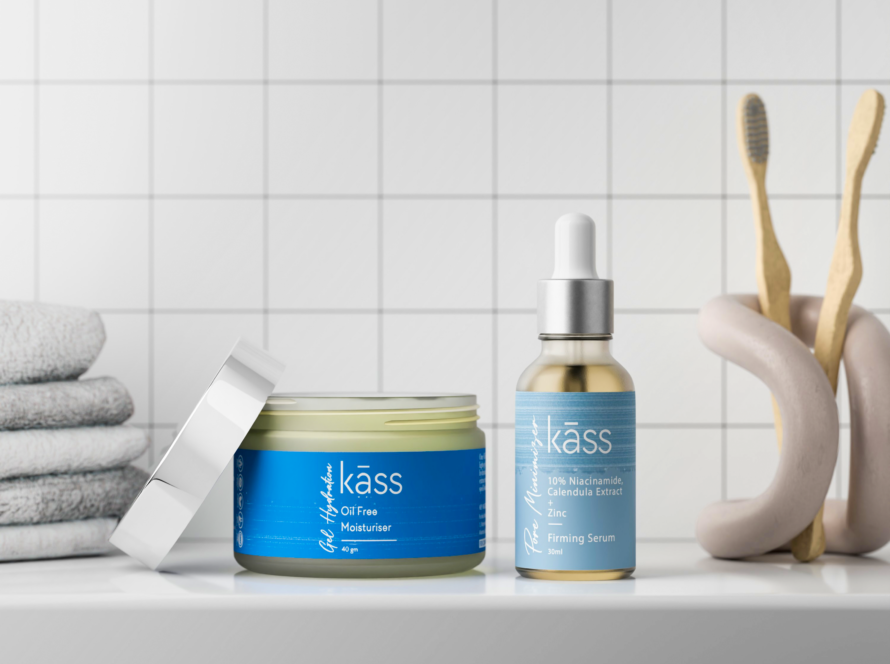
That is why CGI Product Animation is becoming an increasingly useful tool for ecommerce brands. Instead of relying entirely on static product photography, brands can use movement, camera direction, digital environments, simulations, and product demonstrations to communicate information in a much more controlled way.
A good 3D Product Animation does not simply make a product spin. It can demonstrate functionality, reveal construction, show scale, create a visual story, and make complicated products easier to understand.
This shift is also changing how brands think about their product assets. Our recent Blender 3D Animation guide looks at the production side of this change, including how Blender is being used to create commercial product visuals and why the software is only one part of the creative process.
“`
What Does a Customer Actually Need to See Before Buying a Product Online?
“`The customer usually wants answers before they want advertising.
How large is the product? What does it look like from the side? How does it open? What happens when it is switched on? What is included? How does a mechanism move? What does the material look like? How is the product used?
A product page that answers these questions visually can remove friction from the buying process.
This is particularly important on marketplaces, where the customer may be comparing several similar products in the same search results. Our Amazon product listing guide explores how product imagery needs to communicate information quickly when customers are browsing a marketplace rather than visiting a physical store.
Animation adds another communication layer because the viewer can see the product behaving rather than simply looking at it.
“`
Why Can Movement Make an Ecommerce Product Easier to Understand?
“`Human beings are naturally good at interpreting movement. When an object opens, rotates, expands, connects, pours, folds, or transforms on screen, the viewer can understand the relationship between its parts without reading a technical explanation.
This is particularly useful for products where the selling point is functionality rather than appearance.
Consider a smart device with several ports. A photograph can label the ports, but an animation can show the device being connected, how the components interact, and what happens during operation.
The same principle works for furniture, appliances, electronics, sports equipment, packaging, cosmetics, tools, and industrial products.
The animation becomes a demonstration rather than an advertisement alone.
“`
Can 3D Product Animation Show Something That a Camera Cannot?
“`This is one of the strongest reasons to use CGI.
A physical camera has to exist somewhere in the real world. A 3D camera does not. It can move through the product, travel underneath it, pass between components, enter an internal mechanism, or move through an environment that does not physically exist.
You can also remove parts of a product without damaging anything, freeze components in mid-air, create an exploded view, or transition from a complete product to an internal cross-section.
The SheaBouba 3D Animation project demonstrates how a product can be treated as the centre of a designed visual sequence rather than simply photographed from several angles.
That freedom is difficult to reproduce with conventional product photography because the physical limitations of the product, camera, location, lighting, and set are no longer the only constraints.
“`
Why Is CGI Particularly Useful for Products With Complex Features?
“`The more difficult a product is to explain visually, the more valuable animation can become.
A simple bottle might only need attractive product imagery. A technical device may need an explanation of its internal structure. A piece of equipment may need to demonstrate assembly. A cosmetic product may benefit from showing its texture and application. An electronic device may need to communicate several functions in a few seconds.
Instead of creating separate explanations for every feature, a carefully planned animation can combine them into one visual story.
This is where product visualization becomes more than a rendering exercise. The objective is to decide what the customer needs to understand and then build the visual sequence around that information.
“`
Can CGI Product Animation Make a Marketplace Listing More Competitive?
“`It can give the listing another way to communicate value.
Marketplace customers often move quickly between competing products. A strong visual presentation can therefore make an important difference in how quickly a product communicates its features and positioning.
Our Walmart product listing guide focuses on this broader ecommerce problem: product listings need a visual system rather than a collection of unrelated images.
A CGI animation can become one part of that system. Static hero imagery can establish the product, lifestyle imagery can establish context, infographics can explain features, and animation can demonstrate movement or functionality.
Each asset has a different job.
“`
How Can One 3D Model Be Turned Into Multiple Product Assets?
“`This is where CGI starts becoming particularly interesting from a business perspective.
Once an accurate digital version of the product has been created, the same asset can potentially be used for completely different outputs.
- Hero product renders
- Alternative product angles
- Feature graphics
- Lifestyle scenes
- Exploded views
- Product animations
- Website visuals
- Social media videos
- Digital advertising
- Launch campaign visuals
This is particularly useful when the same product needs to appear across Amazon, Walmart, Flipkart, a direct-to-consumer website, and social platforms.
Our Flipkart product listing guide looks at the marketplace side of this problem, where the visual content needs to work within a highly competitive product discovery environment.
Instead of producing every image from scratch, a brand can build a digital foundation and create new content from that foundation.
“`
Why Does This Matter When a Brand Has a Large Product Catalogue?
“`Creating individual photographs for every variation can become difficult when a catalogue contains dozens or hundreds of SKUs.
Colours change. Packaging changes. New variants launch. Products are discontinued. Campaigns require different backgrounds and formats.
A flexible 3D workflow can make these changes considerably easier to manage because the product exists digitally and can be adapted for different marketing requirements.
That does not mean every ecommerce product needs an expensive animation. It means brands can decide which products deserve the additional investment based on their commercial importance.
“`
Can 3D Animation Help a New Product Launch Before Physical Stock Arrives?
“`Yes, and this is one of the most useful applications of product CGI.
A new product may have CAD data, engineering drawings, packaging artwork, measurements, or other references long before the final production batch reaches a warehouse.
Those references can provide the foundation for a digital product asset, allowing marketing teams to begin developing visuals before the physical product is widely available.
This can be useful for pre-launch campaigns, distributor presentations, ecommerce preparation, advertising concepts, social media teasers, and sales materials.
CGI therefore isn’t only useful after a product exists. It can become part of the product launch process itself.
“`
Does CGI Product Animation Make Products Look More Expensive?
“`It can influence perceived value, but only when the production quality supports the positioning.
Luxury products depend heavily on presentation. Materials need to feel believable, reflections need to be controlled, edges need to catch light correctly, and camera movement needs to communicate precision rather than simply movement.
The Oud Beauty 3D Animation project is an example of using controlled CGI presentation to give a beauty product a more deliberate visual identity.
The same principle can be seen in luxury product visualization. When creating a digital product image, small details such as surface roughness, reflections, bevels, lighting gradients, and camera perspective can dramatically change how the object is perceived.
CGI does not automatically make something premium. Precision does.
“`
How Does 3D Animation Help Customers Understand Product Quality?
“`Quality is often difficult to communicate through words.
A brand can say that its product uses premium metal, precision engineering, advanced construction, or high-quality materials. But showing those qualities visually can be far more immediate.
A close camera movement across a brushed-metal surface, a controlled reveal of an internal mechanism, or an animation showing how several components fit together can communicate engineering and construction without a lengthy explanation.
This is particularly useful for products where craftsmanship is part of the selling proposition.
“`
Can a Product Animation Replace Product Photography?
“`Not necessarily—and brands should not think of CGI and photography as enemies.
Photography has a major advantage: it captures the real physical product. It can communicate authenticity, real-world texture, and physical context extremely well.
CGI has a different advantage: control.
With CGI, the artist can control the environment, camera, lighting, materials, product position, background, animation, and effects with far fewer physical limitations.
The strongest strategy can therefore involve both. Photography can establish authenticity while product CGI and animation can handle demonstrations, impossible views, variations, and cinematic advertising.
“`
Why Are Brands Combining Product Images With Animation Instead of Choosing One?
“`Because customers don’t consume product information in only one way.
One customer may want to inspect the product photographically. Another may want to see how it works. Someone else may want to understand the dimensions or compare it with a familiar object.
A complete product presentation can therefore combine several visual formats.
The Amazon-focused product content we discuss at VNS follows this broader idea: every visual should have a purpose, whether that is establishing the product, explaining a feature, demonstrating use, or creating desire.
“`
Can CGI Product Animation Be Used for Social Media Too?
“`Definitely.
In fact, social media is one of the environments where CGI can become particularly noticeable because the viewer is constantly scrolling through competing visual content.
A product can transform, appear from darkness, break apart, float through an environment, interact with particles, or transition between different product states within a short vertical video.
That gives brands far more creative possibilities than simply cropping a product photograph into a vertical format.
A single 3D asset can also be adapted into different durations and aspect ratios, allowing the same campaign idea to work across Reels, Shorts, paid advertisements, websites, and product pages.
“`
Why Is Blender 3D Animation Relevant to Ecommerce in 2026?
“`Blender has developed into a broad production platform rather than a tool limited to basic 3D modeling. The official Blender feature set includes modeling, animation, simulation, rendering, compositing, motion tracking, VFX, and video editing.
The current Blender 5.2 LTS release also brings improvements across animation, rendering, Geometry Nodes, asset libraries, compositing, and simulation, with long-term support through July 2028.
For product work, that broad pipeline matters because an artist may need to move from modeling to materials, from materials to animation, and from animation to rendering and compositing without treating each stage as a completely separate production process.
Blender’s official animation documentation also covers keyframes, curves, non-linear animation, drivers, motion tracking, and video sequencing, which gives artists considerable control over how a product behaves on screen.
That makes Blender particularly useful when the goal isn’t just a still render but an entire sequence built around the product.
“`
Does the Latest Blender Version Change What Brands Can Do With CGI?
“`The important change isn’t that a new software version suddenly makes every animation better. The bigger advantage is the continued development of the tools available to artists.
Blender 5.2 LTS introduces improvements to procedural workflows, physics, asset libraries, rendering, animation, and the compositor. Its updated asset library system also supports remote hosting, which can be useful in larger digital production workflows.
For brands, these technical developments matter indirectly. Better tools can give artists more options for building reusable assets, creating complex scenes, managing simulations, and producing variations efficiently.
“`
Can 3D Product Animation Be Used to Explain What Is Inside a Product?
“`Yes, and this is one of the areas where CGI has a major advantage.
An animation can gradually remove an outer shell, separate components, highlight a particular mechanism, and then reconstruct the product.
Instead of asking the customer to imagine what happens inside the product, the animation shows them.
This can be especially effective for electronics, appliances, machinery, tools, automotive components, and technology products where internal engineering is part of the product’s value proposition.
“`
How Can CGI Animation Demonstrate Product Features Without Using a Physical Set?
“`A digital environment can be designed specifically around the product’s communication requirements.
If a product needs to appear in a laboratory, the entire laboratory can be created digitally. If it needs to float in space, there is no need to build a physical set. If the campaign needs a microscopic environment, the camera can simply move into a digitally constructed world.
This is where CGI animation becomes a creative medium rather than simply a replacement for photography.
The SheaBouba project and the Oud Beauty project illustrate two different ways product-focused 3D work can be directed visually rather than following a generic template.
“`
Can CGI Product Animation Be Used Across Amazon, Walmart and Flipkart?
“`The underlying 3D asset can be reused across platforms, but the final content should always be prepared according to the requirements of each platform and placement.
A marketplace hero image, product-page video, social advertisement, website banner, and paid-media creative do not necessarily need the same composition.
The advantage of having a 3D product is that the camera, framing, background, lighting, and animation can be adjusted for each use case without recreating the physical product.
That is why our Walmart listing content, Flipkart listing content, and Amazon product content should be viewed as parts of a wider ecommerce visual strategy rather than isolated marketplace requirements.
“`
What Is the Difference Between a Product Animation and a Product Commercial?
“`A product animation is usually focused on communication. It may demonstrate a feature, explain a mechanism, show an assembly, or present the product from different angles.
A product commercial has a different objective: it needs to create attention, desire, emotion, and brand recall.
That means a commercial may use a story, custom environments, dramatic lighting, visual effects, simulations, transitions, music, and a more cinematic camera language.
The distinction matters because a brand doesn’t always need a cinematic commercial. Sometimes the most effective investment is a clear 8-second product demonstration.
Other times, particularly for a major product launch, the brand may need something much more ambitious.
“`
Why Does the Quality of the 3D Model Matter So Much?
“`Animation cannot hide a badly constructed product model forever.
If the proportions are wrong, edges are unrealistic, materials behave incorrectly, or small details are missing, the problem becomes more obvious once the camera starts moving around the product.
This is why professional 3D product animation starts with accurate product preparation.
The model needs to hold up from multiple angles, because animation exposes surfaces that might never appear in a single photograph.
This also explains why the production process behind CGI can involve considerably more work than simply importing a model and pressing render.
“`
Can a Brand Use CGI to Create Different Product Colours and Variants?
“`Yes. Once the digital material system has been built correctly, product variants can often be produced without physically photographing every version.
A cosmetic brand could show several packaging colours. An electronics company could introduce different finishes. A furniture brand could demonstrate multiple upholstery options.
This can make CGI particularly valuable for products with many variations.
Instead of organizing a separate physical shoot every time a colour changes, the digital asset can become the foundation for a wider visual catalogue.
“`
How Does 3D Animation Fit Into a Larger Product Marketing Strategy?
“`The strongest CGI projects don’t begin with the question, “What animation should we make?”
They begin with, “What does the customer need to understand or feel?”
If the customer needs to understand a mechanism, the animation should demonstrate the mechanism. If the brand needs to establish luxury, the lighting and material treatment should communicate luxury. If the product needs to stand out on social media, the first seconds should be designed around attention.
This customer-first approach is also why our CGI in 2026 article looks at CGI as part of a broader brand-content system rather than treating it as a standalone visual effect.
“`
Is CGI Product Animation Only Useful for Large Brands?
“`No.
The scale of the project should match the commercial importance of the product.
A smaller ecommerce brand might only need one accurate 3D model, several product renders, and a short feature animation. A global consumer brand might require dozens of shots, multiple environments, product variants, and campaign adaptations.
CGI becomes useful when the visual return justifies the production investment.
The mistake is assuming that every CGI project needs to be a massive cinematic production.
“`
Can AI Replace CGI Product Animation?
“`AI can accelerate many parts of creative production, but accurate product visualization presents a different challenge.
A brand may need the exact shape of a product, accurate packaging, correct logos, consistent materials, repeatable camera positions, and a digital asset that can be edited months later.
A generated image can be visually impressive while still changing details that matter commercially.
This is why the relationship between AI and CGI is more useful to discuss than the idea of one simply replacing the other. Our AI vs CGI in 2026 analysis explores how the two approaches can serve different parts of a modern production workflow.
For product marketing, AI can be useful for ideation and exploration, while a controlled 3D pipeline can provide the accuracy and repeatability needed for final commercial assets.
“`
What Should Brands Look for When Choosing a 3D Animation Company?
“`The software name should not be the first thing you evaluate.
Look at whether the 3D animation company understands products, ecommerce, advertising, materials, lighting, camera language, and commercial communication.
A studio that produces excellent character animation may not necessarily be the right partner for a product launch. Likewise, a studio that produces beautiful still renders may not have the production experience needed for complex animation.
Look at relevant work.
Does the portfolio contain products similar to yours? Can the studio show both simple product visualization and more complex commercial work? Does the work look accurate when the camera moves close to the product?
Those questions are often more important than whether the studio uses Blender, Maya, or another 3D package.
“`
What Makes a Good CGI Product Animation Different From a Generic 3D Video?
“`A generic 3D video is often designed around effects.
A strong product animation is designed around communication.
Every shot should have a reason to exist. The camera should lead the viewer’s attention. The lighting should support the product. The animation should reveal something. The environment should reinforce the brand. The final frame should leave the viewer with a clear impression of what the product is and why it matters.
That is the difference between making a product move and creating a product experience.
“`
How Can VNS Creative Agency Help Brands With CGI Product Animation?
“`At VNS Creative Agency, our approach to product CGI is built around the product, the audience, and the purpose of the content.
We work across CGI Product Animation, 3D Product Animation, product visualization, product rendering, ecommerce imagery, product commercials, VFX, and 3D lifestyle content.
That means a project can begin with a simple product image requirement and develop into a larger visual system containing renders, animations, advertising content, and marketplace assets.
You can explore the wider range of VNS Creative Agency’s 3D and commercial services to see how different forms of CGI can work together.
Our portfolio also includes different visual approaches, from the SheaBouba 3D animation to the Oud Beauty CGI project, showing why product animation should be developed around the identity and objectives of each brand rather than using one fixed visual formula.
“`
What Is the Real Business Value of CGI Product Animation?
“`The value isn’t simply that the final video looks impressive.
The real advantage is the amount of control a brand gains over how its product is presented.
A digital product can be viewed from almost any angle. Features can be demonstrated without physical prototypes. Environments can be created without physical sets. Product variants can be visualized without photographing every SKU. Content can be adapted for different platforms.
And perhaps most importantly, the digital asset can continue generating value after the original animation has been delivered.
That changes CGI from a one-time video expense into something closer to a reusable visual production asset.
“`
Should Every Ecommerce Brand Invest in 3D Product Animation?
“`No.
The right question isn’t whether every brand should use 3D. It is whether 3D solves a problem that the brand currently has.
If customers don’t understand how the product works, animation may help. If the product has complex internal features, CGI may help. If the product needs to be presented in impossible environments, CGI may help. If the brand needs a large library of reusable visual assets, CGI may help.
But if a simple photograph communicates everything the customer needs to know, there may be no reason to turn that product into a complicated animation.
The best CGI is not the CGI with the most effects. It is the CGI that solves the right communication problem.
“`
Where Is CGI Product Animation Heading in 2026?
“`The direction is moving toward more reusable assets, faster iteration, richer product experiences, and increasingly flexible production pipelines.
Blender’s current development reflects that broader direction, with improvements across procedural systems, simulation, rendering, asset management, animation, and compositing.
At the same time, AI is changing how artists approach concept development and experimentation. Rather than eliminating traditional 3D workflows, this creates an opportunity to combine rapid ideation with controlled digital production.
For ecommerce brands, the outcome could be a much more flexible approach to product content: one accurate digital product, many different marketing applications.
“`
So, Can 3D Product Animation Actually Help Sell Products Online?
“`Yes—but its value comes from what it communicates, not simply from the fact that it is 3D.
The best CGI Product Animation makes a product easier to understand, gives customers information they cannot get from a single photograph, demonstrates features clearly, and creates a stronger visual impression of the brand.
For ecommerce businesses, that can mean turning a product listing into a demonstration. For premium brands, it can mean creating a more controlled and desirable product presentation. For companies with complex products, it can mean explaining features that would otherwise require paragraphs of text.
The real opportunity is not simply to replace photography with CGI.
It is to build a visual system where photography, 3D rendering, CGI animation, product visualization, and digital advertising all work together.
“`
Ready to Create a 3D Product Animation for Your Brand?
“`If your product needs more than another static image, VNS Creative Agency can develop a CGI-based visual experience around it.
From CGI Product Animation and 3D Product Animation to product visualization, ecommerce imagery, product commercials, VFX, and 3D lifestyle content, we create visuals designed around how your product needs to be presented and sold.
Talk to VNS Creative Agency about your project or explore our portfolio to see how 3D can be used beyond a conventional product photograph.
“`