
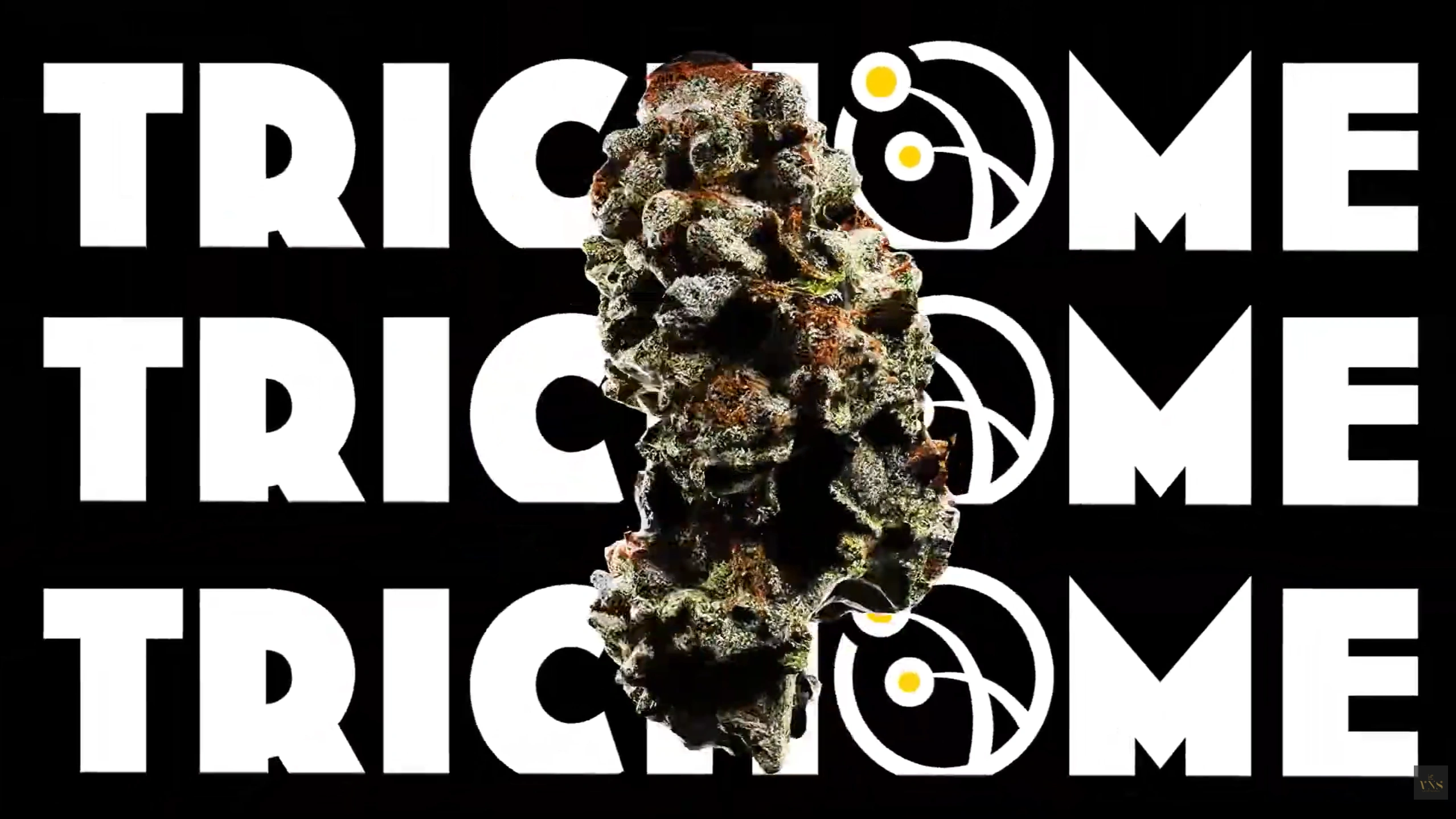
What Was the Creative Approach Behind the Trichome Commercial?
How do you turn a product into the visual centerpiece of a commercial without making the presentation feel overloaded?
That was the starting point for the Trichome commercial.
Instead of building the video around excessive effects, the creative direction focused on giving the product a strong visual presence through composition, lighting, camera movement, and carefully controlled environments.
The product needed to feel substantial within the frame.
Every camera angle was therefore considered in relation to its shape and design.
Every lighting decision was made to help define the surface.
Every movement had to contribute to the overall presentation.
This is where 3D animation product production becomes particularly valuable. Rather than adapting the product to a fixed physical setup, the entire visual world can be constructed around it.
The final commercial becomes a controlled product experience rather than simply a recording of an object.
How Did We Decide What Visual Story the Product Needed?
A product commercial doesn’t always need a traditional storyline with characters and dialogue.
For Trichome, the product itself became the story.
The sequence could move from introduction to detail and finally to a strong hero presentation.
This creates a simple visual progression:
Introduce → Reveal → Explore → Emphasize
The viewer first understands the overall product.
Then the camera begins revealing additional details.
Close-up compositions give attention to specific surfaces or design elements.
Finally, the product receives a strong hero moment.
This approach gives 3D product animation a clear purpose.
The animation isn’t there simply because movement looks impressive.
It exists to control how the audience discovers the product.
Why Did CGI Make Sense for the Trichome Product?
Some products are difficult to make visually interesting using only conventional photography.
The camera may need to move around the product in a very specific way.
The background may need to change.
The product may need to appear in multiple compositions.
Lighting may need to be adjusted between shots.
These requirements can make a physical production more restrictive.
With product CGI, the entire scene exists digitally.
The product can be positioned precisely.
The camera can travel along a predetermined path.
Lighting can be modified without rebuilding a studio.
And different environments can be explored without physically producing each one.
For the Trichome commercial, this flexibility allowed the visual direction to remain focused on the product.
How Was the Trichome Product Recreated Digitally?
Before the animation could begin, the product needed to be transformed into a detailed digital model.
This is one of the most important stages in a CGI workflow.
The model needs to maintain the product’s proportions and visible design characteristics while also being detailed enough for close-up shots.
Edges, curves, transitions, and small surface elements all contribute to the final result.
A camera moving past the product can reveal details that would never be noticed in a static render.
That is why a production-ready 3D asset must be designed with animation in mind.
Once the model is complete, it becomes the foundation for the materials, lighting, camera work, animation, and final rendering.
How Did We Make the Digital Product Feel Physically Real?
Realism in CGI product animation comes from many small details working together.
Geometry provides the shape.
Materials determine surface behavior.
Lighting creates highlights and shadows.
Reflections communicate the surrounding environment.
Depth of field creates camera realism.
Together, these elements help the viewer interpret the digital object as something with physical properties.
For Trichome, the objective was not simply to create a technically accurate model.
It was to make the product visually convincing once it was placed under commercial lighting and viewed through a moving camera.
What Did Material Design Add to the Trichome Animation?
Imagine a product with perfectly modeled geometry but completely flat surfaces.
It would still look digital.
Materials provide the next level of realism.
Different surfaces need different responses to light.
Glossy areas can create sharper reflections.
Matte surfaces can produce softer highlights.
Smooth surfaces allow light to travel cleanly across them.
Small variations in roughness can change the perceived quality of the product.
This is why material development is such an important part of product CGI.
The objective is to reproduce the visual behavior of the real product while making sure those materials continue to look convincing as the camera moves.
How Did We Use Lighting to Create Depth Around Trichome?
Lighting determines how the product separates itself from its surroundings.
For a commercial, flat lighting can make a product feel lifeless.
However, excessive contrast can hide important details.
The solution is controlled lighting.
Highlights can be positioned along edges.
Soft shadows can create separation.
Reflections can reveal curved surfaces.
Subtle gradients can give the background depth.
For Trichome, lighting was therefore treated as a visual design element.
The product needed to remain readable while still having enough contrast and atmosphere to feel cinematic.
How Did the Camera Transform a Product Shot Into a Commercial Shot?
A static render tells the audience what the product looks like.
A moving camera can tell them how to look at it.
This distinction is central to 3D video production.
The camera can start wide and gradually approach the product.
It can move laterally to reveal the silhouette.
It can rotate around a specific section.
It can transition from a wider composition into a close-up.
It can then settle into a final hero angle.
These movements create a visual journey.
Instead of presenting Trichome as one object in one frame, the commercial allows the viewer to experience different aspects of the product throughout the sequence.
How Did We Prevent the Camera Movement From Feeling Generic?
Not every camera movement is useful.
A camera can orbit around a product for several seconds, but if nothing changes, the movement eventually becomes repetitive.
For Trichome, camera choreography was considered in relation to the product.
Movement should reveal something.
A change in perspective should provide new information.
A close-up should have a visual reason.
A transition should move the story forward.
This creates more purposeful product animation.
The viewer is not watching a camera move around a product.
They are discovering the product through the camera.
Why Was Visual Restraint Important for the Trichome Commercial?
CGI makes it possible to add almost anything.
Particles can be added.
Lighting can become more dramatic.
The camera can move faster.
Background elements can multiply.
Transitions can become increasingly complex.
But the presence of more elements doesn’t necessarily improve a commercial.
For Trichome, the product needed to remain the visual priority.
The environment supports the product.
Lighting defines it.
Animation creates movement.
Effects, where appropriate, should enhance the scene rather than compete with it.
This restraint allows the commercial to feel more intentional and product-focused.
How Did We Design the Background Around the Product?
The background can change how a product is perceived.
It influences contrast, color relationships, reflections, and overall mood.
Because Trichome was created digitally, the environment could be designed specifically around the product.
This means the background doesn’t have to be treated as a separate element.
It becomes part of the product presentation.
The relationship between the product and its surroundings can be adjusted until the composition feels balanced.
This same principle is visible in our Oud Beauty 3D Animation, where the surrounding CGI environment is used to support the product rather than distract from it.
How Did We Keep Trichome Consistent Across Different Shots?
Commercials often require multiple perspectives.
The product may appear close to the camera in one shot and much further away in another.
It may rotate.
The camera may change height.
The lighting may produce different reflections.
Despite these changes, the product must remain consistent.
A controlled 3D product animation workflow makes this easier because the same digital asset is used throughout the sequence.
The geometry remains consistent.
The materials remain consistent.
The proportions remain consistent.
Only the camera, lighting, composition, and animation change.
This gives the final commercial a unified visual identity.
What Were the Most Important Technical Considerations During Production?
Creating a polished CGI product animation requires more than modeling and rendering.
Several elements have to work together.
How Did We Manage Product Geometry?
The model needed enough detail for close-up shots without unnecessarily increasing scene complexity.
How Did We Handle Materials?
Surface properties had to remain convincing under changing camera angles and lighting.
How Did We Control Reflections?
Reflections needed to communicate the material without overpowering the product.
How Did We Manage Camera Depth?
Depth of field had to create a cinematic look without making important product details blurry.
How Did We Optimize Rendering?
Lighting, reflections, shadows, and other render calculations needed to be balanced against production efficiency.
Each of these decisions affects the final commercial.
How Did We Structure the Trichome Animation From Start to Finish?
The production was approached as a sequence of connected stages.
First came the digital product preparation.
Then the materials were developed.
After that, lighting and environments were established.
Camera compositions were planned around the product.
Animation was introduced to create movement between the shots.
The resulting frames were rendered and refined through post-production.
This workflow is particularly important in 3D video production because every stage depends on the previous one.
If the product geometry changes late in production, it can affect materials.
If the materials change, the lighting may need adjustment.
If the camera changes, reflections may need to be reconsidered.
A structured workflow keeps these dependencies manageable.
How Did Animation Give the Trichome Product More Personality?
A physical product doesn’t move on its own.
But animation allows the creative team to decide how the audience experiences its form.
A slow rotation can make the product feel refined.
A controlled camera push can create anticipation.
A sudden transition can create energy.
A pause can emphasize a hero moment.
These choices contribute to the personality of the commercial.
This is the difference between simply creating an animation product and developing a visual identity for the product.
The movement becomes part of the brand presentation.
How Can One CGI Product Asset Support More Than One Campaign?
Creating a detailed digital product isn’t necessarily useful only for one commercial.
Once the Trichome asset has been developed, it can potentially be adapted for additional content.
The same model can be used to create still renders.
Different camera positions can produce new product imagery.
New environments can create alternative campaign visuals.
Short clips can be extracted for social media.
Additional animations can be developed for future launches.
This is one reason 3D product rendering can complement animation production.
The digital product becomes a reusable visual asset rather than something created for a single frame.
How Can Trichome’s Commercial Be Adapted for Digital Platforms?
A commercial doesn’t necessarily have to exist as one long video.
The production can potentially be adapted into different content formats.
Shorter edits can focus on product reveals.
Vertical versions can be created for social platforms.
Close-up sections can become individual clips.
Hero shots can be used as campaign imagery.
This flexibility makes 3D product animation particularly useful for digital-first marketing.
The same core product asset can support several pieces of content while maintaining a consistent visual identity.
What Can Other Brands Learn From the Trichome Commercial?
The most useful lesson is that product advertising doesn’t have to depend on complexity.
A product can be visually engaging when its most important characteristics are presented correctly.
The shape needs to be clear.
The materials need to feel believable.
The lighting needs to reveal the surface.
The camera needs to provide meaningful movement.
The environment needs to create the right context.
And the animation needs to maintain a sense of progression.
When these elements work together, CGI product animation becomes a storytelling system rather than simply a technical production method.
How Does Trichome Compare With Other VNS CGI Product Projects?
Every product requires a different creative solution.
Our ORL Organic Oral Care 3D Animation project demonstrates how CGI can be adapted to a different category and visual requirement.
The production principles may overlap, but the final creative direction should never feel identical.
The product determines the approach.
Its shape influences the camera.
Its materials influence the lighting.
Its identity influences the environment.
Its audience influences the overall visual tone.
That is why our CGI projects are developed around individual products rather than relying on one universal visual template.
Why Is 3D Product Animatie Becoming Useful for Modern Product Marketing?
The phrase 3D product animatie is commonly used for digitally created product movement and visualization.
As brands increasingly depend on digital content, products need to be presented in formats that work naturally on screens.
3D animation can provide movement, detail, and flexibility without requiring a physical setup for every visual.
A single product asset can potentially generate commercial videos, short-form content, product renders, and campaign visuals.
This makes it a practical option for brands that need a larger volume of consistent product content.
How Can Product Animation Strengthen a Brand’s Visual Identity?
Product presentation can become part of branding.
When a brand consistently uses a particular style of lighting, camera movement, composition, and color treatment, audiences can begin to recognize its visual language.
Product animation provides another way to build that language.
The product becomes the constant element.
The surrounding visual system can then establish the brand’s personality.
For Trichome, the commercial focuses on creating a polished product experience where the product remains recognizable throughout the sequence.
How Can VNS Creatives Create a Similar Commercial for Your Product?
The Trichome commercial is an example of how CGI can transform a physical product into a controlled cinematic experience.
At VNS Creatives, our workflow combines 3D animation product, 3D product animation, product CGI, CGI product animation, 3D video production, modeling, texturing, lighting, camera animation, rendering, and post-production.
Our CGI product animation resource explores the wider possibilities of creating animated product visuals through CGI.
For beauty and cosmetic products, our cosmetic photography work provides another approach to creating polished product imagery.
Our broader approach as a creative agency in Mumbai also allows product-focused creative work to be developed around the requirements of each individual brand.
Whether the requirement is a commercial film, product launch, digital advertisement, social media campaign, or ecommerce content, CGI gives brands the ability to control the complete visual environment around their product.
What Makes Trichome a Strong Example of 3D Product Animation?
The strength of the Trichome commercial comes from treating the product as more than an object that needs to be displayed.
It becomes the subject of the film.
The camera reveals its form.
Lighting defines its surfaces.
Materials create physical credibility.
The environment establishes context.
Animation creates progression.
And rendering brings the entire digital world together.
That combination demonstrates what 3D product animation can achieve when the technology is guided by creative direction.
The goal isn’t simply to make a product move.
The goal is to make the audience remember what they saw.