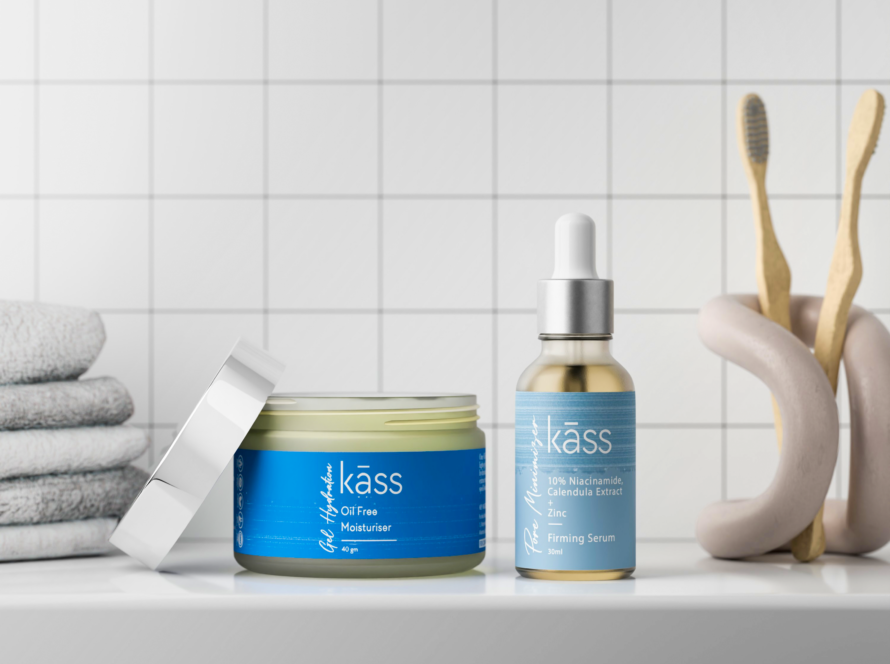
What if your product could do more than sit in front of a camera?
What if it could float, transform, open itself, reveal its internal components, travel through an impossible environment, interact with liquids, break apart into hundreds of pieces, or become the centre of an entire visual world?
That is the creative opportunity behind 3D animation for products.
Instead of treating a product as an object that needs to be photographed, 3D animation allows brands to treat it as the main character of a visual story.
A bottle can become the hero of a beauty campaign. A watch can travel through a cinematic environment. A technical device can reveal its internal architecture. A consumer product can transform from a simple object into a complete advertising experience.
For brands competing for attention across websites, social media, ecommerce and advertising, this approach can make product communication far more dynamic.
At VNS Creatives, product-focused CGI and animation are built around this idea: the product should remain the hero while the visual world supports its identity. Our work in product CGI explores how digitally created products can be transformed into polished marketing visuals.
Why Can 3D Animation for Products Make Ordinary Objects Look Extraordinary?
A physical product has limitations.
It occupies one physical space.
It has one physical size.
A camera can only capture it from certain angles.
A physical environment has to be constructed or found.
With 3D animation for products, those limitations become creative choices.
A product can be enlarged to monumental proportions.
A camera can move through the packaging.
The product can float in mid-air.
Different materials can interact with one another.
The background can change without moving the physical product.
Even gravity can become part of the creative concept rather than a restriction.
This is what separates product animation from simply adding movement to a product shot.
The product becomes part of a designed visual experience.
Adobe’s product-visualisation resources similarly describe 3D as a way to create product imagery, explore different perspectives, control lighting and produce visualisations for marketing and customer experiences. Adobe 3D Product Visualization
How Can a 3D Product Animation Turn a Product Into a Story?
Imagine a skincare bottle appearing inside a dark environment.
A narrow beam of light reveals its silhouette.
The camera slowly moves closer.
The bottle rotates.
The cap separates.
The product texture appears.
A liquid element moves around the packaging.
The environment transforms.
The final frame returns to the product.
Nothing physically needed to happen.
Everything was created to make the product communicate an idea.
That is the power of 3D product animation.
The animation can be built around a narrative rather than simply showing the product from different angles.
For brands interested in exploring the broader concept, our animation product article looks at product animation as a commercial visual medium.
What Is the Difference Between 3D Animation Product Content and Traditional Product Video?
Traditional product video generally begins with something physical.
The product is placed somewhere.
The camera is positioned.
Lights are arranged.
The scene is filmed.
The final footage is edited.
With 3D animation product workflows, the production begins by creating or preparing a digital version of the product.
That gives the creative team control over:
- Camera movement
- Product position
- Lighting
- Materials
- Reflections
- Backgrounds
- Environments
- Product transformations
- Visual effects
- Animation timing
This doesn’t mean traditional production has become obsolete.
Instead, it gives brands another production method when a physical shoot cannot deliver the desired visual concept.
Our 3D animation product guide explores this broader relationship between product animation and commercial visualisation.
How Can CGI Product Animation Show Things a Camera Cannot?
A camera captures reality.
CGI product animation can construct reality.
That distinction opens up some interesting possibilities.
A product can be shown from the inside.
A bottle can be sliced open.
A machine can separate into individual components.
A cosmetic package can transform into an abstract environment.
A watch can be presented at an enormous scale.
A product can move through a completely imaginary landscape.
This is particularly useful when a product has a feature that customers cannot easily understand from static photography.
Instead of explaining the feature through a long paragraph, animation can show it.
That is one reason product animations can be powerful in advertising.
The viewer does not necessarily have to imagine what the product does.
They can see it.
How Does 3D Animation for Products Change the Way Brands Approach Product Marketing?
Product marketing animation allows brands to communicate product positioning visually.
A luxury product might use controlled lighting, elegant camera movement, detailed materials, and atmospheric environments.
A technology product might use mechanical animation, precision camera movements, exploded views, and technical transitions.
A beauty product might use fluid simulations, macro shots, soft materials, and ingredient-inspired environments.
The animation therefore becomes an extension of the brand identity.
The same product could be presented in ten completely different ways depending on the audience and campaign.
That flexibility is one of the biggest advantages of 3D product animation production.
What Can One 3D Product Model Become After Production?
This is where the value of a good 3D workflow becomes particularly interesting.
The final animation is only one possible output.
The underlying product asset can potentially become:
- CGI product images
- Ecommerce renders
- Product videos
- Social media animations
- Website visuals
- Digital advertisements
- Product demonstrations
- Launch campaign assets
- Interactive 3D experiences
- Alternative product variations
Adobe’s current business-focused Substance 3D information describes using digital product twins to create imagery for social media, ecommerce, advertising and other channels, including different product variants and perspectives. Adobe Substance 3D for Business
This is why product CGI should not always be viewed as a one-time image-production exercise.
A well-developed 3D asset can become part of a brand’s long-term visual library.
How Can 3D Content Distribution Make a Product Animation More Valuable?
Creating a beautiful animation is only part of the job.
The next question is where that content will go.
This is where 3D content distribution becomes important.
A brand may need the same product campaign in several forms:
Television: cinematic commercial.
YouTube: longer product video.
Instagram: vertical short-form content.
Website: hero animation.
Ecommerce: product demonstration.
Paid advertising: short performance-focused versions.
Digital displays: silent looping animation.
Instead of producing each piece independently, the original 3D asset can become the foundation for multiple outputs.
This can make a 3D video production workflow much more useful for brands that need content continuously.
How Can 3D Product Content Creation for Ecommerce Extend the Customer Experience?
Ecommerce customers cannot physically touch the product before buying it.
They cannot pick it up.
They cannot rotate it in their hands.
They cannot examine its surface.
They cannot open it unless the website shows them how.
This creates an information gap.
3D product content creation for ecommerce can help reduce that gap through visual demonstrations, interactive models, animations and detailed renders.
Our 3D content creation for ecommerce article explores this topic in greater detail.
The opportunity becomes even more interesting when animation and interactive 3D are considered together.
A customer could watch a product animation and then interact with a 3D model on the product page.
The commercial creates desire.
The ecommerce experience provides information.
The two work together.
Why Is 3D Product Animation Becoming More Relevant in 2026?
The conversation around CGI in 2026 is increasingly connected to content scalability.
Brands do not simply need one campaign image anymore.
They need content for websites, social platforms, ecommerce stores, advertisements, launches, presentations and multiple product variations.
Our recent discussion of CGI in 2026 looks at how brands are using CGI to create more flexible visual content.
The interesting shift is that CGI is becoming less about one spectacular image and more about building reusable digital assets.
A product can be modelled once and then adapted repeatedly.
That makes 3D animation for products particularly interesting for brands with large product catalogues or frequent marketing campaigns.
How Can 3D Animation Help a Brand Launch a Product Before a Physical Shoot?
Sometimes the marketing campaign needs to begin before everything is physically ready.
Packaging may still be in development.
A product may be approaching launch.
A physical production set may not yet exist.
3D can provide a way to visualise the product digitally.
A brand can develop campaign concepts around a digital model and create product imagery before arranging a conventional shoot.
This does not mean that every product should be marketed entirely through CGI.
It means brands can use CGI when timing, flexibility, or creative requirements make physical production difficult.
Adobe’s product visualisation guidance also highlights the ability of 3D workflows to explore product concepts and variations before final physical production. Adobe Product Visualization with 3D
What Does an Exciting 3D Animation for Products Actually Look Like?
The answer depends on the product.
There is no universal “3D style.”
A luxury fragrance may need elegance.
A skincare product may need softness.
A technology product may need precision.
A food product may need appetite appeal.
A lifestyle product may need energy.
The visual style should come from the product.
For example, Oud Beauty’s 3D animation demonstrates how a beauty product can be presented through a controlled digital environment.
SheaBouba’s 3D animation takes another product-focused approach to beauty content.
Bud Naked Beauty shows how a product can become the centre of a complete CGI commercial involving modelling, materials, lighting, animation and visual effects.
Meanwhile, Moon Dust’s product 3D animation demonstrates how an atmospheric environment can help establish a product’s visual identity.
How Can CGI Product Images Work With 3D Animation?
Not every customer needs a video.
Sometimes they need a clean product image.
This is why CGI product images can complement animation.
A brand could use:
- Hero CGI image for the website
- Product animation for the campaign
- Detail renders for ecommerce
- Vertical animation for social media
- Interactive model for product exploration
The same 3D asset can support all of these outputs.
This also creates a stronger connection between still and motion content.
Instead of the product looking different in every campaign asset, the CGI pipeline can maintain consistency in materials, proportions, lighting, and visual identity.
Why Should Brands Combine Product Photography and CGI?
There is still an important place for photography.
A real product photograph provides physical authenticity and can be especially useful for ecommerce galleries, lifestyle imagery, catalogues and marketplaces.
The question is not whether photography or CGI is better.
The question is what each method can accomplish.
Consider Rolex product photography.
A luxury watch demands precise control over reflections, surfaces, materials, composition and detail. CGI can complement that approach by creating camera movements and environments that may be difficult to achieve through conventional photography.
Our product photography changing article explores how product photography continues to evolve.
For beauty brands, our cosmetic photography resource looks at the importance of professional product presentation.
The strongest campaign may use both photography and CGI rather than choosing only one.
How Do Product Photography Charges in India Compare With a CGI Workflow?
Cost is naturally one of the first questions brands ask.
Searches around product photography charges India often focus on the studio, photographer, number of products, number of images, styling, retouching, location and production requirements.
A CGI project has a different cost structure.
The budget can depend on modelling complexity, animation duration, materials, environments, simulations, rendering requirements, post-production and the number of final outputs.
This means comparing a photography quote directly with a CGI quote is not always useful.
The better question is:
What content does the brand need to produce, and how many useful assets can the production generate?
For brands producing content repeatedly, a reusable 3D asset can potentially become more valuable over time.
How Does Cosmetic Photography Price Compare With 3D Beauty Content?
Beauty brands often search for cosmetic photography price when planning campaigns.
The final cost can vary substantially depending on whether the project requires simple packshots, styled compositions, models, props, locations, set design, advanced retouching, or multiple products.
A 3D workflow changes the production equation.
Once the digital product is created, the brand can potentially explore different backgrounds, lighting conditions, camera positions, materials and compositions without physically rebuilding the shoot.
This is particularly useful for brands that need both 3D product animation and still visuals.
The objective should not be to select CGI because it is “cheaper.”
The objective should be to select the production method that gives the brand the right creative flexibility.
What Is the Difference Between Animation Product and Product Animation?
Search behaviour around product visuals can produce several variations, including animation product, product animation, and 3D product animation.
Although the wording changes, the underlying concept is similar: using motion and digital visualisation to communicate a product.
The more important distinction is how the animation is used.
A simple turntable may show the product from every angle.
A product demonstration may explain functionality.
A commercial animation may create an emotional association.
An ecommerce animation may answer a customer’s practical question.
A launch film may establish the entire identity of a new product.
The production should therefore be built around the purpose rather than the keyword.
How Can 3D Product Animations Be Designed for Multiple Marketing Channels?
A modern campaign may require several versions of the same animation.
The original commercial could be widescreen.
The social version could be vertical.
The ecommerce version could be shorter.
The advertising version could focus on one feature.
The website version could be a seamless loop.
This is where 3D product animations become particularly adaptable.
The virtual camera can be repositioned.
Shots can be reframed.
Animations can be shortened.
Different product variations can be introduced.
Still frames can be rendered from the same scenes.
This is one of the reasons 3D animation for marketing is increasingly connected to broader content strategies rather than being treated as a standalone video.
How Can a Brand Evaluate an Animated Video Company Comparison?
Choosing a production partner can become confusing because many studios describe themselves using similar terms.
A useful animated video company comparison should look beyond the demo reel.
Brands should evaluate:
- Product modelling quality
- Material realism
- Lighting
- Camera movement
- Animation quality
- Commercial storytelling
- Product accuracy
- Post-production
- Portfolio relevance
- Communication
- Ability to produce multiple formats
A studio that creates excellent character animation may not necessarily be the right choice for product CGI.
A team specialising in product visuals may understand packaging, materials, reflections, product proportions, ecommerce requirements and commercial product presentation much better.
This is why portfolio relevance matters.
How Do I Vet Creative Agencies Without Wasting Weeks on Endless Pitches and Calls?
One of the most useful questions a brand can ask is:
“How do I vet creative agencies without wasting weeks on endless pitches and calls?”
Start with the work.
Look for projects similar to your product category.
Check whether the agency understands product detail.
Look at the quality of materials and lighting.
Check whether animation is being used to communicate something or simply to make the product rotate.
Then ask for a clear production process.
A professional creative agency should be able to explain how the project moves from brief to concept, storyboard, modelling, animation, rendering, post-production and delivery.
The creative agency in Mumbai guide from VNS Creatives provides additional context around creative production and agency services.
Why Can a VNS Agency Approach Be Different for Product-Focused CGI?
When researching a vns agency, brands may come across different types of creative studios.
For product-focused projects, the important question is whether the agency understands the product itself.
At VNS Creatives, product CGI, animation, photography and commercial visualisation form part of the same creative ecosystem.
The studio’s work spans product-focused CGI, commercial animation, product photography and digital visual content.
You can explore the wider vnscreatives.com portfolio to see how different product categories are approached visually.
The aim is not simply to create a digital object.
It is to create content that can be used to market that object.
What Can VNS Creatives’ Product Animation Portfolio Teach Brands About 3D?
A portfolio is often the easiest way to understand what a production team can actually do.
The VNS product animation portfolio brings together different examples of product-focused animation.
For commercial product work, Trichome demonstrates a commercial-oriented visual direction.
Standard Vape provides another example of a product commercial built around controlled CGI visuals.
ORL Organic Oral Care shows how product animation can be adapted to oral-care branding.
Michael Taylor Skincare demonstrates another beauty and skincare application.
And Cregaetine’s commercial video shows how a product can be developed into a dedicated commercial video experience.
These projects demonstrate an important principle: there is no single formula for 3D animation for products.
The product determines the visual language.
How Can 3D Product Animation Support a Digital Marketing Strategy?
A product animation becomes even more useful when it connects to a wider digital campaign.
A brand could use the animation as the hero asset and then develop:
- Social media clips
- Paid advertisements
- Ecommerce content
- Website visuals
- Email campaign content
- Product launch teasers
- YouTube content
- Digital display advertisements
This is where 3D video production connects with digital marketing.
Rather than creating every campaign asset independently, brands can build multiple outputs around one carefully developed 3D product.
For businesses already investing in digital marketing, this can make visual content a much more integrated part of the strategy.
Can a Digital Marketing Service in Koliwada Mumbai With Phone Number Replace a Product-Focused Creative Studio?
This is an important distinction for businesses searching locally.
A digital marketing service in Koliwada Mumbai with phone number may provide services such as SEO, paid advertising, social media management, or lead generation.
Those services can be valuable.
But digital marketing and product CGI are different production disciplines.
A performance marketing team may know how to distribute an advertisement.
A product animation studio needs to know how to create the product visual itself.
The strongest campaigns can bring both capabilities together.
One creates the asset.
The other distributes and optimises it.
How Can Internet Marketing and Product Animation Work Together?
The same principle applies to searches for internet marketing service in Koliwada Mumbai with phone number.
Marketing determines where and how the audience encounters the product.
3D production determines what the audience sees.
When those disciplines work together, a campaign can have a stronger connection between creative production and distribution.
For example:
3D product animation → social media advertisement → landing page → ecommerce product page → purchase.
The animation creates attention.
The digital marketing campaign creates reach.
The ecommerce page provides product information.
Each stage supports the next.
What Does the Future of 3D Animation for Products Look Like?
The future is unlikely to be about making every product animation more complicated.
It will be about making product assets more useful.
A single product model can potentially support photography, animation, ecommerce, advertising, social media and interactive experiences.
AI will also increasingly influence how brands create environments, variations and supporting visual content, but accurate product representation remains important.
The product itself still needs to look correct.
Its packaging needs to be accurate.
Its materials need to behave convincingly.
Its proportions need to be right.
Its branding needs to remain consistent.
That is why the combination of skilled 3D production and newer creative technologies is more interesting than simply replacing one workflow with another.
Can 3D Animation for Products Become a Long-Term Brand Asset?
Yes.
This may ultimately be one of the most valuable reasons to invest in professional product CGI.
A physical photoshoot produces photographs.
A well-developed 3D workflow can produce a digital product asset that can potentially continue generating content.
The same model can be used for a new campaign.
A new colour can be created.
A new environment can be developed.
A different camera angle can be rendered.
A new product demonstration can be animated.
A new ecommerce image can be produced.
The brand is no longer starting from zero every time it needs a new product visual.
That is the real difference between producing one animation and building a reusable 3D product asset.
What Should Brands Remember Before Starting a 3D Product Animation Project?
The most important thing is to start with the product and the message.
Do not begin with:
“We want something flashy in 3D.”
Begin with:
“What does the audience need to understand or feel about this product?”
Then decide how 3D can communicate that idea.
If the product needs to demonstrate functionality, build the animation around functionality.
If it needs to communicate luxury, build the visual language around materials, lighting and atmosphere.
If it needs to explain construction, use exploded views and controlled camera movements.
If it needs to create desire, focus on composition, texture, movement and storytelling.
That is how 3D animation for products becomes commercially useful instead of becoming visual decoration.
Frequently Asked Questions About 3D Animation for Products
1. How long does it take to create a 3D animation for a product?
The timeline depends on the complexity of the product, whether a 3D model already exists, the number of shots, animation complexity, simulations, rendering requirements, revisions, and final deliverables. A simple product animation can be relatively straightforward, while a cinematic commercial involving complex environments and simulations requires considerably more production time.
2. Can one 3D product animation be reused for ecommerce, advertising, and social media?
Yes. When the project is planned correctly, the underlying 3D product asset can support multiple outputs. The same production can potentially generate 3D product animations, still renders, ecommerce content, social media clips, advertising variations and website visuals. Planning distribution before production makes it easier to create these different versions efficiently.
Why Is 3D Animation for Products More Than Just Making a Product Move?
A product animation is not successful simply because the product rotates beautifully.
The real opportunity is storytelling.
A product can become a character.
A package can become an environment.
A feature can become a visual sequence.
A technical mechanism can become an explanation.
A campaign can become an entire digital world built around one physical object.
That is why 3D animation for products continues to become more interesting for brands.
It combines product animation, 3D product animation, 3D animation product workflows, CGI product animation, product CGI, 3D video production, product marketing animation, 3D content creation for ecommerce, and 3D content distribution into one flexible visual system.
For brands that want their products to do more than simply appear on screen, 3D provides the opportunity to make the product the hero of the story.